How to Clear a Green Pool
Green pool water is an algae bloom. Here is the proven way to clear it: test CYA, shock to the right chlorine level for your stabilizer, brush, filter nonstop, and hold the level until the water is clear.
A green pool means algae has taken over because free chlorine dropped too low to keep up. The fix is a method pool owners call SLAM: raise free chlorine to the shock level set by your CYA, brush the whole pool, run the filter around the clock, and hold that chlorine level until the water is fully clear. The single biggest mistake is under-dosing, so the right target for your stabilizer matters more than the gallons alone.
Why pools turn green
Algae spores are always blowing into your pool. They only bloom when chlorine cannot suppress them, which happens for predictable reasons.
- Free chlorine fell too low, often after a hot stretch, a storm, a party, or a few days of neglect.
- CYA is too high for your chlorine, so the chlorine you have is weakened and cannot hold algae back. Read more in the FC and CYA relationship.
- The pump ran too little, leaving dead spots where algae settles and grows.
- Heavy debris or phosphates fed the bloom with extra organic load.
Step 1: Test CYA and set your shock target
This is the step everyone skips, and it is why green pools stall. Your shock level is not a fixed number, it scales with your cyanuric acid. A pool with 30 ppm CYA needs a much lower shock level than one at 80 ppm. Test CYA, then use the shock calculator to turn your volume and CYA into an exact dose. For the method behind the numbers, see how to shock a pool.
Gear to clear a green pool

In The Swim Cal-Hypo Pool Shock (68%, 12 x 1 lb)
Fast, strong granular shock to reach the algae-killing chlorine level.

CPDI Liquid Chlorine (12.5%, 4 Gallons)
No-residue alternative to granular shock for raising chlorine fast.

Sepetrel 17.5" Pool Brush Head
Wide brush to scrub algae off walls and floor before and during shock.
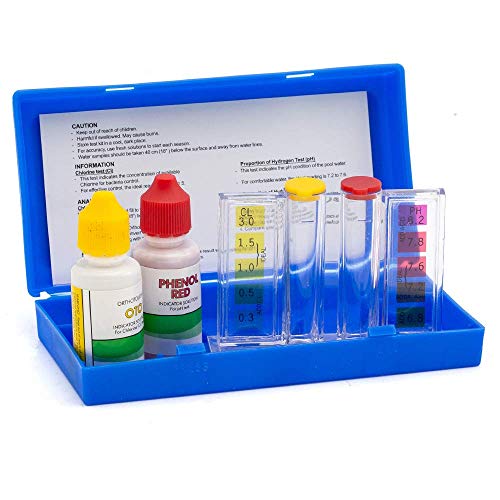
WWD POOL 2-Way Pool Test Kit (Chlorine + pH)
Re-test chlorine often so you can hold the shock level until clear.
Step 2: Balance pH, then shock
Before shocking, bring pH down to about 7.2, since lower pH makes chlorine more aggressive and gives a cleaner reading at high levels. Then add your shock dose with the pump running. Use the shock calculator dose, broadcast or pre-dissolve granular cal-hypo per the label, or pour liquid chlorine slowly across the deep end.
Safety first. Never mix pool chemicals, and never combine different chlorine types or chlorine with acid. Always add chemical to water, never water to chemical. Pre-dissolve cal-hypo to avoid bleaching a vinyl liner, run the pump while dosing, and retest before re-dosing. Store chemicals separately, away from kids and pets.
Step 3: Brush, filter, and hold the level
Shock alone will not finish the job. The combination of brushing, filtering, and re-dosing is what clears the bloom.
- Brush the entire pool daily, walls, floor, steps, and shaded corners, to break algae loose and expose it to chlorine.
- Run the filter 24 hours a day. A clean filter clears faster, so backwash or rinse it as it loads up with dead algae.
- Re-test every few hours at first. Chlorine gets eaten quickly while algae dies, so top back up to the shock level each time it drops.
- Hold the level, not just hit it once. Maintain the shock target until the water turns from green to cloudy to clear.
Expect the water to pass through a milky gray or white stage. That haze is dead algae, and it means the chlorine is winning. Keep filtering and it will clear. A clarifier or vacuuming to waste can speed up the final cleanup of the cloudiness.
Step 4: Confirm the pool is clear
You are done when three things are true at once:
- The water is clear and you can see the main drain sharply.
- Free chlorine holds steady overnight with little loss, which means no remaining algae demand.
- Combined chlorine reads near zero.
Once clear, let free chlorine drift back down to the normal range for your CYA, confirm pH is 7.2 to 7.6, and the pool is swimmable again.
How to keep your pool from turning green again
- Hold free chlorine in range every single day, especially during heat waves and after heavy use.
- Keep CYA in a sensible range, 30 to 50 ppm for chlorine pools, so your chlorine stays strong.
- Run the pump for at least one full turnover daily, more in summer.
- Brush weekly and clean the filter on schedule.
- Shock after storms and parties before algae gets a foothold.
- Use a maintenance algaecide as backup insurance once the water is clear.
If algae keeps returning or you are seeing yellow or black spots instead of an even green, identify the type in our guide to green, mustard, and black pool algae. And to nail the dose every time, keep the shock calculator handy.
Pool Care & Maintenance Planner
Water-test log, chemical dosing tracker, weekly maintenance schedule, and opening and closing checklists, in one printable planner that keeps your pool clear all season.
Frequently Asked Questions
How long does it take to clear a green pool?
A light green pool often clears in 2 to 4 days, while a deep, dark-green or swampy pool can take a week or more. The key is reaching and holding the correct shock level around the clock, brushing daily, and running the filter nonstop. The water usually turns cloudy gray or white before it goes clear, which is a sign the algae is dying.
How much shock do I need for a green pool?
It depends on your cyanuric acid (CYA) level, not the gallons alone. Algae needs a free chlorine target far above normal, often roughly 40 percent of your CYA reading, held steadily until the pool clears. Use our shock calculator to convert your pool volume and CYA into the exact dose, since under-shocking is the top reason green pools stall.
Why is my pool still green after shocking?
Almost always you did not reach or hold the shock level long enough. Chlorine gets consumed fast while killing algae, so a single dose drops below target within hours. Re-test, top back up to the shock level, and keep brushing and filtering. High CYA can also bind your chlorine, meaning you need a higher target or partial drain and refill.
Should I brush a green pool before or while shocking?
Both. Brush thoroughly right before you add shock to break up algae and expose it to chlorine, then brush again daily throughout the process. Brushing also keeps dead algae suspended so the filter can remove it. Pay extra attention to shaded corners, steps, and behind ladders where algae clings and chlorine reaches last.
Can I swim in a green pool?
No. Green water means algae and likely bacteria, the filter and chemistry are out of control, and you cannot see the bottom, which is a drowning hazard. Wait until the water is clear, free chlorine has settled back into the normal range for your CYA, and pH is balanced before anyone gets in.
Do I need algaecide to clear a green pool?
Chlorine, not algaecide, does the heavy lifting of killing an active green bloom. Algaecide is better as a preventive after the pool is clear, or as a supporting tool for stubborn types. Spend your effort on reaching the correct shock level, brushing, and filtering, then use algaecide to keep algae from coming back.
Taking care of a pool?
Use our free calculators and guides to get every number right.
Pool Care Planner: $39