How to Fix High CYA (Stabilizer)
High cyanuric acid weakens your chlorine and lets algae take hold. The only reliable fix is dilution: a partial drain and refill, or a reverse osmosis service. Here is how to diagnose and lower CYA the right way.
If your chlorine keeps disappearing and algae keeps coming back, high cyanuric acid (CYA) is a common cause. CYA, also called stabilizer or conditioner, protects chlorine from sunlight, but too much of it locks chlorine up and makes it weak. The frustrating part: there is no chemical that removes CYA from your water. The only reliable fix is dilution, meaning a partial drain and refill with fresh water, or a mobile reverse osmosis (RO) service. Stop adding stabilizer-based products first, then dilute down to range.
Why CYA climbs in the first place
Unlike chlorine, which gets used up, CYA stays in the water more or less forever. It only goes down when you physically remove water. Meanwhile, several everyday habits keep adding it.
- Trichlor tablets. Those stabilized pucks in your floater or chlorinator are mostly trichlor, which adds CYA every time one dissolves. A season of tablets can push CYA past 100 ppm without you adding stabilizer on purpose.
- Dichlor shock. Stabilized granular shock (dichlor) also carries CYA. Used week after week, it stacks up fast.
- Adding stabilizer directly and overshooting the dose, then having no easy way to walk it back.
- Topping off instead of replacing water, so evaporation concentrates everything left behind, including CYA.
Why high CYA weakens your chlorine
Chlorine and CYA exist in a balance. A little stabilizer is good, it shields free chlorine from burning off in the sun. But the more CYA you have, the more of your chlorine is bound up and held in reserve instead of actively sanitizing. The number that matters is the FC/CYA ratio, not free chlorine alone. As a rule of thumb, your target free chlorine should be roughly 7.5 percent of your CYA reading for a chlorine pool. If CYA is 100, you would need to hold around 7 to 8 ppm free chlorine just to get normal sanitizing power, which is expensive and hard to maintain. Lower the CYA and a normal 2 to 4 ppm does the job again. For the full picture, see our guide to the FC and CYA relationship.
How to diagnose high CYA
You cannot guess CYA from how the water looks, you have to test it. Use a test kit or strip that actually reads cyanuric acid, since basic chlorine and pH kits do not.
- Test CYA when the water is at a stable temperature, ideally not right after a big rain or top-off.
- If your strip or kit maxes out (reads "100+" or off the scale), your true level may be much higher. A pool supply store can run a diluted test for an exact figure.
- Plug your reading into our CYA calculator to see how far over range you are and how much dilution it will take to get back.
Gear to measure and manage CYA
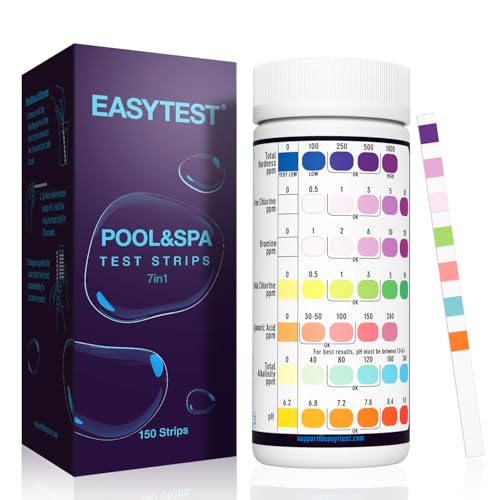
EASYTEST 7-Way Pool Test Strips (150 ct, reads CYA)
Reads cyanuric acid along with free chlorine, pH, and alkalinity so you can track stabilizer.
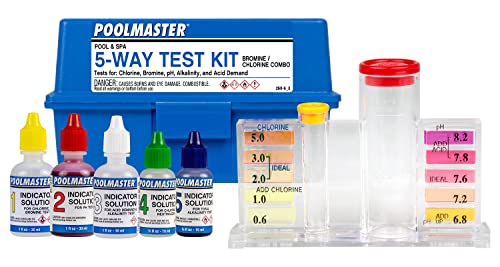
Poolmaster 5-Way Test Kit with Case
Liquid drop kit for chlorine, pH, alkalinity, and stabilizer when you want a precise reading.

CPDI Champion Liquid Chlorine (12.5%, 4 Gallons)
Adds no stabilizer, so you can sanitize while you dilute CYA back into range.

CPDI Champion Liquid Chlorine (12.5%, 2 Gallons)
Smaller-batch CYA-free chlorine for keeping FC up during the dilution period.
How to fix high CYA: dilution is the only reliable route
Because nothing in normal pool care destroys CYA, you lower it by replacing stabilized water with fresh, low-CYA water. You have two practical options.
Option 1: Partial drain and refill
This is what most owners do because it is simple and cheap. CYA falls in direct proportion to the water you swap out. Replace a quarter of the water and CYA drops about 25 percent, replace half and it drops about half, as long as your fill water has little to no CYA.
- Test your fill water first. Some well and municipal sources already contain CYA, which limits how low you can go.
- Drain in stages, lowering the level partway, refilling, retesting, then repeating if needed, rather than emptying the pool.
- Mind your liner and the water table. Never fully drain a vinyl or fiberglass pool yourself, and avoid draining inground pools after heavy rain, since groundwater can float the shell. When in doubt, call a pro.
- Run the pump and let the water mix before you retest, then confirm with the CYA calculator.
Option 2: Reverse osmosis (RO) service
In drought-prone areas, or if you have very high CYA and want to save water, a mobile RO service filters your existing water on site, stripping out CYA, salts, and other dissolved solids while you keep most of the water. It costs more than draining but wastes far less water and avoids exposing the liner. Search for mobile pool RO or water recycling services in your area.
Safety first. While you bring CYA down, keep sanitizing with liquid chlorine or cal-hypo, which add no stabilizer. Never mix pool chemicals, and never combine chlorine with acid or with a different chlorine type. Always add chemical to water, never water to chemical, run the pump while dosing, and retest before re-dosing. Store chemicals separately, away from kids and pets. Dosing figures are estimates based on standard formulas, so always test your own water.
How to prevent CYA from creeping back up
- Switch your routine chlorine source. Use unstabilized liquid chlorine or cal-hypo for day-to-day sanitizing instead of trichlor tablets, which add CYA continuously.
- Reserve stabilized products for short-term needs. If you use tablets while traveling, count on rechecking CYA afterward.
- Add stabilizer deliberately, not by accident. If you do need to raise CYA, dose to a target and use the CYA calculator so you do not overshoot.
- Test CYA monthly during swim season, and again at opening, so a slow climb never sneaks up on you.
- Lower a too-high level early. It is easier to dilute from 60 back to 40 than to fight a pool sitting at 120 all summer. For a step-by-step walkthrough, see how to lower CYA.
The takeaway: high CYA is not a chemistry problem you can dose your way out of, it is a water-replacement problem. Stop feeding it with stabilized tablets, dilute down to the right range for your pool, then hold free chlorine at the proper FC/CYA ratio. Do that and your chlorine starts working hard again, and algae loses its opening. Keep the CYA calculator handy to plan each refill.
Pool Care & Maintenance Planner
Water-test log, chemical dosing tracker, weekly maintenance schedule, and opening and closing checklists, in one printable planner that keeps your pool clear all season.
Frequently Asked Questions
Can you lower CYA without draining the pool?
For practical home pool care, no. Cyanuric acid does not break down, evaporate, or get consumed, so the only reliable ways to lower it are diluting with fresh water (a partial drain and refill) or paying for a reverse osmosis mobile service that filters it out on site. CYA-reducing additives exist but work slowly and inconsistently, so most owners get faster, more predictable results from dilution.
What is a high CYA level for a pool?
For a traditional chlorine pool, aim for 30 to 50 ppm CYA. Salt pools run a little higher, around 60 to 80 ppm, because the cell drips chlorine all day. Anything much above those ranges starts to weaken your chlorine noticeably. Readings of 80, 100, or off-the-chart are common in pools run on trichlor tablets all season, and that is when chlorine stops keeping up.
Does high CYA cause algae?
Indirectly, yes. High CYA does not feed algae, but it weakens the chlorine you have, so the free chlorine level that normally suppresses algae is no longer strong enough. Owners often respond by adding more chlorine and still see green water. The real fix is to lower CYA by dilution and then hold free chlorine at the correct ratio for your new, lower stabilizer level.
How much water do I need to drain to lower CYA?
CYA drops in direct proportion to the water you replace. Draining and refilling about a quarter of the pool lowers CYA by roughly 25 percent, and replacing half cuts it about in half, assuming your fill water has little or no CYA. To go from 100 ppm to 50 ppm you would replace close to half the water. Test the fill water first, since some sources already contain stabilizer.
Will high CYA go away on its own over time?
Very slowly and unreliably. Cyanuric acid is stable and does not evaporate or burn off the way chlorine does. Over a long season some is lost to splash-out, backwashing, and rain overflow, which dilutes it a little, but you cannot count on it dropping enough to matter. If your level is well above range, plan a partial drain and refill rather than waiting it out.
Should I stop using chlorine tablets if my CYA is high?
Yes, at least until your CYA comes back into range. Trichlor tablets and dichlor shock both add cyanuric acid every time you use them, so they are the usual reason CYA climbs. Switch to liquid chlorine or cal-hypo, which add no stabilizer, while you dilute. Once CYA is back in range you can use tablets sparingly, but watch the level so it does not creep up again.
Taking care of a pool?
Use our free calculators and guides to get every number right.
Pool Care Planner: $39