FC/CYA Chart (Target & Shock Chlorine)
The FC/CYA chart matches your target and shock free chlorine to your cyanuric acid level. Minimum FC is about 7.5 percent of CYA and shock is about 40 percent of CYA.
Quick answer: Match free chlorine to your CYA. The minimum FC is about 7.5 percent of your CYA and the shock (SLAM) level is about 40 percent of your CYA. At 40 ppm CYA, keep free chlorine above 3 ppm (target 5 to 7) and shock at 16 ppm. At 30 ppm CYA, minimum is 3, target 4 to 6, shock 12. Higher CYA always needs higher chlorine.
Free chlorine and cyanuric acid are a team. CYA (stabilizer) protects chlorine from sunlight but also locks up most of it, so the more CYA you run, the more free chlorine you need to keep the water safe. The FC/CYA chart below is the proven reference for hitting the right chlorine at any CYA level. Find your CYA row and read across.
The FC/CYA chart
| CYA (ppm) | Minimum FC (ppm) | Target FC (ppm) | Shock / SLAM FC (ppm) |
|---|---|---|---|
| 20 | 2 | 4 to 6 | 10 |
| 30 | 3 | 4 to 6 | 12 |
| 40 | 3 | 5 to 7 | 16 |
| 50 | 4 | 6 to 8 | 20 |
| 60 | 5 | 7 to 9 | 24 |
| 70 | 5 | 8 to 10 | 28 |
| 80 | 6 | 9 to 11 | 31 |
| 90 | 7 | 10 to 12 | 35 |
The minimum column is roughly 7.5 percent of CYA and the shock column is roughly 40 percent of CYA. Stay in the target range during normal operation, never let free chlorine fall below the minimum, and raise to the shock level only when fighting algae or clearing combined chlorine.
Measure FC and CYA accurately
Taylor K-2006 FAS-DPD Complete Pool Test Kit
Reads free chlorine accurately up to shock levels, plus CYA.
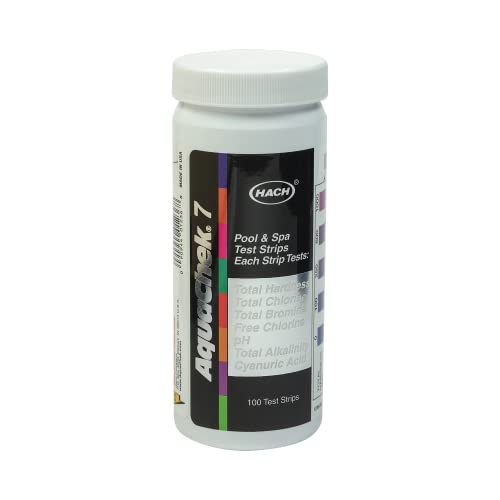
AquaChek 7-Way Pool & Spa Test Strips (100 ct)
Fast daily reads for chlorine, pH, CYA, and alkalinity.
How to use the chart
First, test your cyanuric acid and find the closest row. Then keep your daily free chlorine inside that row's target range. The target is your everyday operating window; the minimum is the hard floor you never want to cross. To add chlorine and land in range, plug your numbers into the chlorine calculator.
The minimum FC is a hard floor
The single most important rule in chlorine pool care is to keep free chlorine at or above the minimum for your CYA at all times. Drift below it, even briefly, and algae gets a foothold. This is why a pool with high CYA and "normal-looking" chlorine of 2 ppm can still turn green: at 60 ppm CYA, 2 ppm is below the minimum.
When and how to reach shock level
Shock (also called SLAM, Shock Level And Maintain) means raising free chlorine to the shock value for your CYA and holding it there until the water clears, combined chlorine reads 0, and chlorine loss overnight is minimal. Use unstabilized liquid chlorine or cal-hypo so you do not add more CYA while shocking. The pool shock dosing chart shows the product amounts by pool size, and the shock calculator works them out from your exact numbers.
Why the FC/CYA ratio works
At any instant, only a tiny share of your free chlorine is in the active form that kills germs; the rest is held in reserve by CYA. As CYA rises, that active share shrinks, so you raise total free chlorine to keep the active portion strong enough. The 7.5 percent minimum and 40 percent shock ratios keep that active chlorine consistent across every CYA level. It is chemistry, not guesswork.
Keeping CYA in a workable range
Because chlorine demand climbs with CYA, runaway stabilizer makes a pool expensive and hard to sanitize. Most chlorine pools run best at 30 to 50 ppm CYA; salt pools run 60 to 80 to protect their steadily generated chlorine. The only practical way to lower CYA is to drain and replace some water. Test CYA every few weeks with the CYA calculator to plan additions, and check your full targets against the pool chemistry levels chart.
Bookmark this chart, test your CYA, and keep free chlorine in the target range for that row. Do that one thing consistently and a green pool becomes almost impossible.
Frequently Asked Questions
What is the FC/CYA chart?
It is a table that matches your target free chlorine to your cyanuric acid level. Because CYA shields chlorine from sunlight but also weakens it, the more CYA you run, the more free chlorine you need to keep water sanitary. The chart gives a minimum FC, a recommended target FC range, and a much higher shock (SLAM) level for each CYA value, so you never have to guess.
What is the FC/CYA ratio?
The minimum free chlorine should be about 7.5 percent of your cyanuric acid, and the shock level should be about 40 percent of your CYA. So at 40 ppm CYA, the FC minimum is around 3 ppm and shock is around 16 ppm. Keeping free chlorine above the minimum at all times is what prevents algae. The 7.5 percent and 40 percent ratios are the heart of the chart.
What happens if free chlorine drops below the minimum?
Below the minimum FC for your CYA, chlorine can no longer keep up with algae and bacteria, even if the water still looks clear. This is the most common cause of a green pool. If FC has been low, treat it as an algae risk: raise chlorine to the shock level for your CYA and hold it there until the water clears and chlorine holds overnight.
Why does high CYA make a pool hard to sanitize?
CYA binds most of the chlorine in reserve, leaving only a small fraction active at any moment. As CYA climbs, you must raise free chlorine just to keep the same sanitizing power. Above about 80 to 100 ppm CYA, the required FC and shock levels get impractically high, which is why many owners partially drain and refill to bring CYA back down to 30 to 50.
Do saltwater pools use the FC/CYA chart too?
Yes. A salt pool makes chlorine with a cell, but the same FC/CYA relationship applies. Salt pools typically run CYA at 60 to 80 ppm to protect the steadily generated chlorine, so use the 60 to 80 rows of the chart. Set your generator output so free chlorine stays in the target range for your CYA, and shock with liquid chlorine if combined chlorine appears.
How do I measure free chlorine high enough to reach shock levels?
Standard test strips and OTO drop tests top out around 5 to 10 ppm, far below shock targets. To read free chlorine accurately up to 20 ppm or more, use a FAS-DPD drop test like the Taylor K-2006. It counts chlorine in precise increments so you know exactly when you have hit and are holding the shock level for your CYA.
Taking care of a pool?
Use our free calculators and guides to get every number right.
Pool Care Planner: $39