Best Pool Test Kits (2026)
The best pool test kits for 2026, from the gold-standard Taylor K-2006 to budget strips. How to test free chlorine, pH, CYA, and alkalinity accurately at home.
If you only buy one tool for your pool, make it a good test kit. Clear, safe water comes down to numbers you can trust, and the most trusted of those numbers come from a drop-based reagent kit. For 2026, the standout is the Taylor K-2006, the FAS-DPD kit that serious pool owners and many pool pros reach for because it reads free chlorine accurately and tests the full chemistry panel. Below are six kits worth owning, from that complete reagent case down to fast daily test strips, plus how to read your results and turn them into the right dose.
Best Pool Test Kits for 2026

Taylor K-2006C Complete FAS-DPD Test Kit
The gold-standard reagent kit: FC, CC, pH, TA, CH, and CYA in one case.
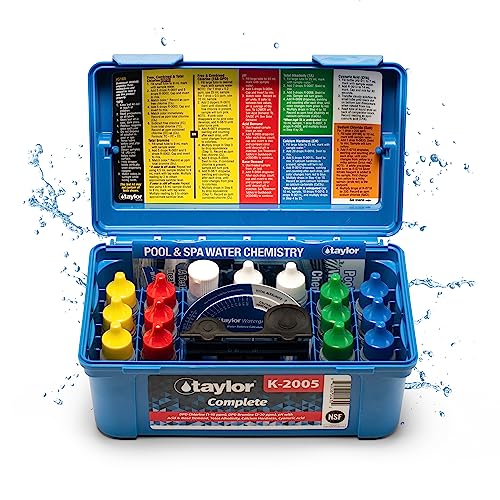
Taylor K-2005 High Range Test Kit
Full panel with high-range chlorine, ideal for SWG and heavily chlorinated pools.

Taylor K-1005 DPD 9-in-1 Test Kit
Nine tests including CYA and calcium hardness without the FAS-DPD titration.

Taylor K-1000 Basic Pool & Spa Kit
Affordable OTO chlorine and phenol red pH kit for quick daily checks.
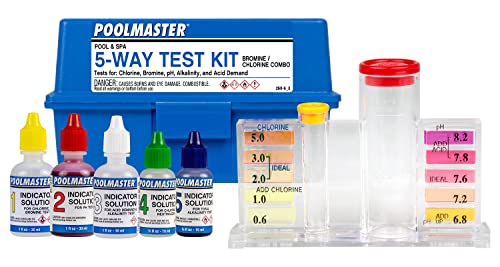
Poolmaster 22260 5-Way Test Kit
Classic five-way reagent kit with a hard case for chlorine, pH, and alkalinity.
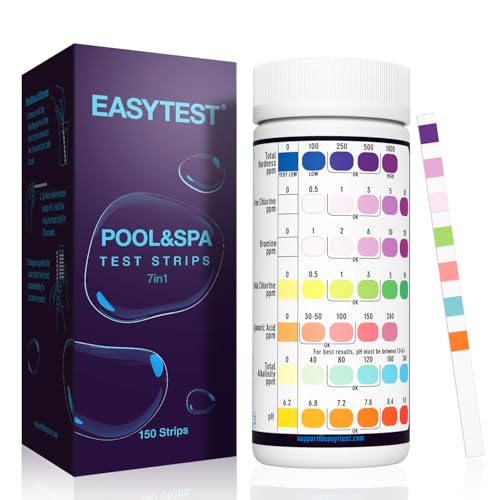
EASYTEST 7-Way Pool Test Strips (150 ct)
Fast, cheap daily strips covering FC, pH, TA, CYA, and hardness.
Quick comparison
Every kit here measures water chemistry, but they differ in how many parameters they cover, how precise the chlorine reading is, and how much fuss is involved. Strips trade precision for speed. Reagent kits trade speed for accuracy you can dose against with confidence.
| Kit | Type | Tests covered | Chlorine method | Best for |
|---|---|---|---|---|
| Taylor K-2006C | Liquid reagent | FC, CC, pH, TA, CH, CYA | FAS-DPD titration | Accuracy-focused owners |
| Taylor K-2005 | Liquid reagent | FC, CC, pH, TA, CH, CYA | DPD high range | Salt and high-chlorine pools |
| Taylor K-1005 | Liquid reagent | 9 tests incl. CYA, CH | DPD | Full panel on a budget |
| Taylor K-1000 | Liquid reagent | Chlorine, pH, acid/base demand | OTO | Cheap daily liquid check |
| Poolmaster 22260 | Liquid reagent | Chlorine, bromine, pH, TA, acid demand | OTO | Simple five-way testing |
| EASYTEST strips | Test strips | FC, TC, pH, TA, CH, CYA, bromine | Colorimetric pad | Fast daily glance |
The picks in detail
Taylor K-2006C: best overall
The K-2006 is the kit most experienced pool owners eventually buy, and the C version comes with larger reagent bottles so it lasts longer between refills. What sets it apart is the FAS-DPD free chlorine test. Instead of matching a fading pink color, you add a powder and titrate drop by drop until the sample turns clear, then read free chlorine in clean 0.2 or 0.5 ppm steps. That precision matters because your chlorine target is tied to your cyanuric acid level, and this kit measures both. It also covers combined chlorine, pH, total alkalinity, and calcium hardness, so it is genuinely a complete panel in one case. The learning curve is real for the first few tests, but the included instructions walk you through it, and the results are worth it.
Taylor K-2005: full panel, high range
The K-2005 covers the same six core parameters as the K-2006 but uses a standard DPD color comparison for chlorine with a high range scale. That makes it a strong fit for saltwater pools and anyone who occasionally runs chlorine high after a shock, since the high range scale will not max out as quickly as a basic kit. If you prefer color matching to titration, this is the full-featured choice.
Taylor K-1005: nine tests on a budget
The K-1005 gives you nine tests, including cyanuric acid and calcium hardness, without the cost of the FAS-DPD reagents. It is a smart middle ground for an owner who wants to see the whole picture, including CYA and hardness, but does not need lab-grade chlorine precision. Pair it with strips for daily checks and you have most of what a chlorine pool needs.
Taylor K-1000: cheap and cheerful
The K-1000 is the classic two-color kit: OTO for chlorine, phenol red for pH, plus acid and base demand. It will not tell you your CYA or alkalinity, so it is not a standalone solution, but as an inexpensive way to keep an eye on chlorine and pH between fuller tests, it is hard to beat. Many owners keep one poolside for a fast morning check.
Poolmaster 22260: simple five-way
The Poolmaster five-way kit covers chlorine, bromine, pH, total alkalinity, and acid demand in a sturdy case. It is a friendly first reagent kit for a new pool or spa owner who finds the Taylor range intimidating. You will still want a way to read CYA eventually, but for learning the rhythm of testing, it does the job.
EASYTEST 7-way strips: best for daily speed
Strips will never match a titration, but a good 7-way strip reads seven values in fifteen seconds, which is exactly what you want for a daily habit. At 150 strips for a low price, the cost per test is tiny. Dip, wait, and compare to the bottle in natural daylight, keeping dry fingers off the pads. Use strips to spot a problem fast, then confirm with a reagent kit before you dose.
How we chose
These picks are based on research into water-chemistry testing methods, manufacturer specifications, and patterns across thousands of verified owner reviews, not on hands-on lab trials. We weighted three things. First, accuracy where it counts: the free chlorine and CYA readings that drive your dosing decisions, which is why FAS-DPD reagent kits rank highest. Second, completeness, because a kit that skips CYA leaves you guessing at your chlorine target. Third, real-world usability and reagent availability, since a kit only helps if you actually use it and can buy refills. We deliberately included a range of prices so a brand-new pool owner and a detail-driven veteran can both find a fit.
Turn your readings into the right dose
A test kit tells you where you are. The next step is knowing how much chlorine to add to get where you want to be, and that depends on your pool volume and current free chlorine. Once you have your numbers, plug them into our chlorine calculator to estimate the right dose of liquid chlorine, cal-hypo, or dichlor for your pool. A few safety reminders that apply to every product on this page: never mix pool chemicals, especially different chlorine types or chlorine and acid, always add chemical to water rather than water to chemical, run the pump while dosing, and retest before you add more. Dosing figures are estimates based on standard pool formulas, so always confirm with your own water test.
Buy the most accurate kit you will realistically use, keep your reagents fresh, and test on a schedule. Do that and the rest of pool care gets dramatically easier.
Pool Care & Maintenance Planner
Water-test log, chemical dosing tracker, weekly maintenance schedule, and opening and closing checklists, in one printable planner that keeps your pool clear all season.
Frequently Asked Questions
Are liquid test kits more accurate than test strips?
For the numbers that matter most, yes. Drop-based reagent kits like the Taylor K-2006 measure free chlorine with a FAS-DPD titration that reads in 0.2 ppm steps and stays reliable even at high chlorine levels. Test strips are fast and convenient for a quick daily glance, but color matching is subjective and the pads can read low when chlorine is high. Many owners keep strips for daily checks and a liquid kit for weekly accuracy.
Which Taylor kit should a beginner buy?
If you want one kit that does everything, the Taylor K-2006 measures free chlorine, combined chlorine, pH, total alkalinity, calcium hardness, and cyanuric acid using the FAS-DPD chlorine method. If you only need the basics, the K-1000 covers chlorine and pH cheaply. The K-1005 sits in the middle with nine tests. Most serious pool owners settle on the K-2006 because it tests the full FC and CYA picture.
How often should I test my pool water?
Test free chlorine and pH at least two or three times a week in swim season, and daily during a heat wave or heavy bathing load. Check total alkalinity weekly, and test cyanuric acid, calcium hardness, and salt every month or so. Always retest before adding more chemical so you do not overshoot. Frequent, simple tests beat occasional, perfect ones.
Do reagents expire?
Yes. Most Taylor reagents last around one to two years once opened, and the DPD powder and OTO solutions degrade faster in heat and sunlight. Store them in a cool, dark, dry place with the caps sealed tight. If your readings start looking strange, replace the reagents before you assume your water is the problem. Buy fresh reagent refills rather than a whole new kit.
Why do I need to measure cyanuric acid?
Cyanuric acid, or stabilizer, protects chlorine from sunlight, but it also raises how much free chlorine you need. The target FC is roughly 7.5 percent of your CYA, so a pool at 30 ppm CYA needs about 2 to 4 ppm FC while a pool at 80 ppm needs much more. If you never test CYA, you are guessing at your chlorine target. A kit that reads CYA is worth the upgrade.
Can I use a pool test kit for my hot tub or spa?
Yes. The same chlorine, bromine, pH, and alkalinity chemistry applies to spas, and Taylor kits include bromine scales. Spas run hotter and smaller, so they swing faster and need more frequent testing. Just match the reagent ranges to your sanitizer, and never mix chlorine and bromine products in the same water.
Taking care of a pool?
Use our free calculators and guides to get every number right.
Pool Care Planner: $39