Free vs Combined Chlorine (FC, CC, TC)
What free chlorine, combined chlorine, and total chlorine actually mean, why combined chlorine over 0.5 ppm means it is time to shock, and how breakpoint chlorination clears it.
Three chlorine numbers matter in a pool, and confusing them is one of the most common beginner mistakes. Free chlorine (FC) is the sanitizer still working for you. Combined chlorine (CC) is spent chlorine bound to contaminants, the stuff that smells and stings. Total chlorine (TC) is just FC plus CC. The goal is simple: keep free chlorine in range and combined chlorine at or near zero. When CC climbs above 0.5 ppm, it is time to shock.
Test Kits That Read FC and CC Accurately

Taylor K-2006C Complete Pool Water Test Kit
FAS-DPD test measures free and combined chlorine directly to 0.2 ppm.

Taylor K-2006 FAS-DPD Pool Test Kit
The standard FAS-DPD kit for precise FC and CC readings when shocking.
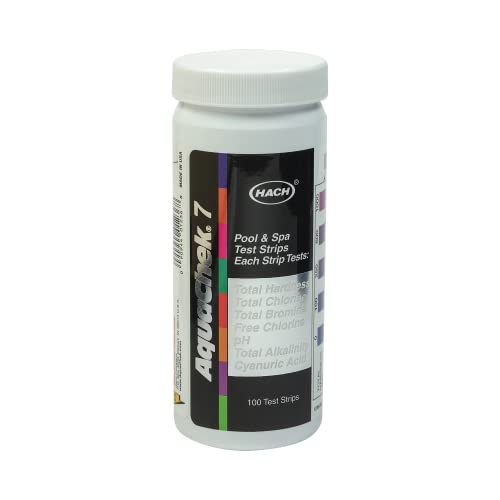
AquaChek 7-Way Pool and Spa Test Strips
Quick read of total and free chlorine to spot rising combined chlorine.

CPDI Champion Liquid Chlorine Pool Shock, 4-Pack
12.5% sodium hypochlorite to raise FC to breakpoint and clear chloramines.
The three readings, defined
Get these three straight and most chlorine confusion disappears.
| Term | What it is | Target |
|---|---|---|
| Free chlorine (FC) | Active chlorine available to sanitize | ~7.5% of your CYA |
| Combined chlorine (CC) | Chlorine bound to contaminants (chloramines) | 0.5 ppm or less |
| Total chlorine (TC) | FC plus CC added together | Should equal FC when CC is near zero |
The math is straightforward: TC minus FC equals CC. If your total chlorine reads 5 ppm and free chlorine reads 4.5 ppm, your combined chlorine is 0.5 ppm, right at the threshold where many owners decide to shock.
Why free chlorine is the one that protects you
Only free chlorine actively kills bacteria, viruses, and algae. It is the working sanitizer. Keeping it in range every day is the single most important thing you do for a safe pool. The right range is not fixed, though. It scales with your cyanuric acid level, because CYA holds chlorine back and makes it less aggressive. This is the core idea in our guide to the FC/CYA relationship, and it is why we say target FC is roughly 7.5 percent of CYA. Set your number with the chlorine calculator and confirm your CYA with the CYA calculator.
Where combined chlorine comes from
When free chlorine attacks contaminants brought in by swimmers, sunscreen, sweat, body oils, and worse, it forms chloramines. These are combined chlorine. Chloramines are weak sanitizers, they irritate eyes and skin, and they are the true source of that infamous chlorine smell. A clean, well-run pool barely smells at all. A pool that reeks of chlorine almost always has high combined chlorine and not enough free chlorine.
This is the great irony of pool care: the strong chlorine smell means you need more chlorine, not less. People who smell it and avoid adding chlorine make the problem worse.
The 0.5 ppm rule: when to shock
Keep an eye on combined chlorine. As long as it stays at or below 0.5 ppm, your daily chlorine is keeping up. Once CC rises above 0.5 ppm, chloramines have built up faster than normal chlorine can clear them, and you need to shock the pool to break them apart.
What is breakpoint chlorination?
Breakpoint chlorination means raising free chlorine high enough to oxidize and destroy the chloramines completely, past the point where they reform. A widely used rule of thumb is that breakpoint requires free chlorine equal to about 10 times your combined chlorine reading. So 1 ppm of CC calls for raising FC to roughly 10 ppm to break it cleanly. If you stop short of breakpoint, you can actually create more chloramines and make the smell worse, so commit to a full dose.
Our dedicated shock calculator turns your pool volume and target into a precise dose, and our step-by-step how to shock a pool guide walks through the whole process. Higher CYA pools need a larger shock dose, another reason to know your stabilizer level.
How to shock safely
- Test first. Measure FC, CC, and CYA so you know your starting point and your breakpoint target.
- Shock in the evening so sunlight does not burn off the chlorine before it finishes the job.
- Run the pump the entire time to circulate the dose.
- Add chemical to water, never the reverse, and never mix different shock products together.
- Wait and retest. Confirm CC has dropped to 0.5 ppm or below and let FC fall back to your normal range before swimming.
Why precise testing matters here
The difference between 0.3 ppm and 0.7 ppm of combined chlorine decides whether you shock tonight or wait. Test strips struggle at that fine resolution. A FAS-DPD drop test reads free and combined chlorine directly and accurately down to small fractions of a ppm, which is why owners who shock by the numbers rely on one. Strips are fine for a quick daily glance, but confirm a borderline CC reading with a drop test before committing to a full shock.
The takeaway
Free chlorine is your protection, combined chlorine is your warning light, and total chlorine ties them together. Keep FC in its CYA-based range, watch CC, and shock to breakpoint whenever CC passes 0.5 ppm. Pair the shock calculator with the chlorine calculator and you will always know your numbers. Dosing figures are estimates based on standard pool-care formulas, so test your own water and retest before adding more.
Pool Care & Maintenance Planner
Water-test log, chemical dosing tracker, weekly maintenance schedule, and opening and closing checklists, in one printable planner that keeps your pool clear all season.
Frequently Asked Questions
What is the difference between free and combined chlorine?
Free chlorine (FC) is the active sanitizer still available to kill germs and algae. Combined chlorine (CC) is chlorine that has already reacted with sweat, oils, urine, and other contaminants, forming chloramines that are weak sanitizers and cause the harsh chlorine smell. Total chlorine (TC) is simply FC plus CC. You want high FC and CC at or near zero.
What does it mean if combined chlorine is high?
A combined chlorine reading above 0.5 ppm means chloramines have built up and your water needs shocking. High CC is the cause of the strong chlorine odor, red stinging eyes, and skin irritation that many people blame on too much chlorine. The fix is to raise free chlorine high enough to break those chloramines apart, called reaching breakpoint.
How do I lower combined chlorine?
You lower combined chlorine by shocking the pool, which means raising free chlorine to breakpoint and burning off the chloramines. As a rule of thumb, breakpoint requires FC roughly 10 times your CC reading. Sunlight and a UV system also help. After shocking, run the pump, retest, and confirm CC has dropped to 0.5 ppm or below.
Why does my pool smell strongly of chlorine?
That sharp pool smell is not a sign of too much chlorine. It is the smell of chloramines, which are combined chlorine. A properly sanitized pool with low CC has almost no odor. A strong smell usually means your free chlorine is too low and combined chlorine has climbed, so the pool actually needs more chlorine, not less.
Can test strips measure combined chlorine?
Most test strips read total and free chlorine, and you estimate combined chlorine by subtracting FC from TC. The trouble is strips lack precision at the small differences that matter. A FAS-DPD drop test, like the Taylor K-2006, measures FC and CC directly down to 0.2 ppm, which is why serious pool owners use one to confirm when shocking is needed.
What free chlorine level should I keep?
There is no single number. Your free chlorine target depends on your cyanuric acid level, roughly 7.5 percent of CYA. A pool at 40 ppm CYA wants about 3 ppm FC, while a pool at 80 ppm CYA needs around 6 ppm. Use our chlorine and CYA calculators to set your specific target, and never let FC fall to zero.
Taking care of a pool?
Use our free calculators and guides to get every number right.
Pool Care Planner: $39