What Is Calcium Hardness?
Calcium hardness (CH) is the amount of dissolved calcium in your pool water, the measure that decides whether water is corrosive or scaling. Here is what it means, the right level, and how to adjust it.
Calcium hardness (CH) is the measure of how much dissolved calcium is in your pool water, and it decides whether the water is gentle, corrosive, or scaling on your surfaces and equipment. Keep it in range and your plaster, grout, tile, and metal parts stay protected. Let it drift and the water either eats at them or coats them in scale.
Calcium hardness in plain English
Water is not happy holding too little or too much calcium. When calcium hardness is too low, the water is hungry. It tries to satisfy itself by pulling calcium out of whatever it touches: plaster surfaces, grout lines, tile, and the metal inside heaters. That is corrosion and etching. When calcium hardness is too high, the water is overloaded and dumps the excess as scale, the white crusty buildup on tile, plumbing, and salt cells.
So calcium hardness is a balance you hold in a comfortable middle, not a number to minimize or maximize.
The right calcium hardness level
The accepted range is 200 to 400 ppm, with the ideal spot depending on your pool surface.
| Pool type | Target CH | Why |
|---|---|---|
| Plaster or concrete | 250 to 400 ppm | Higher calcium protects the cement surface |
| Vinyl | 200 to 350 ppm | No plaster to protect, lower end is fine |
| Fiberglass | 200 to 350 ppm | Smooth surface tolerates the lower range |
Check your full calcium hardness guide for surface-specific advice. Calcium hardness is also one of the inputs to the Langelier index, the overall water-balance score, alongside pH and total alkalinity.
Raising calcium hardness
Low calcium is the more common problem, especially in soft-water regions and vinyl pools. The fix is calcium chloride, sold as calcium hardness increaser. It raises hardness with little effect on pH, so it is a clean adjustment. Broadcast or pre-dissolve it per the label with the pump running, wait several hours, then retest. Dosing figures are estimates, so confirm with a test before adding more.
Calcium Hardness Increasers
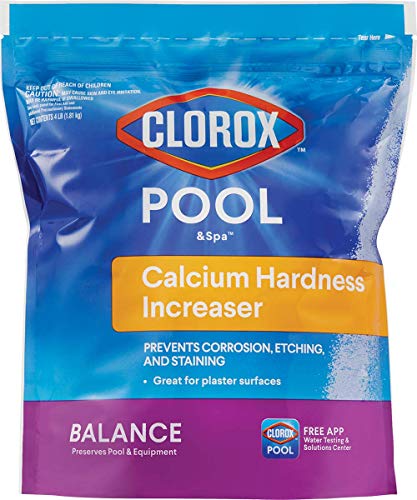
Clorox Pool&Spa Swimming Pool Calcium Hardness Increaser, 4 lb
Raises low calcium to prevent corrosion, etching, and staining.

Pool Mate Premium Calcium Hardness Increaser, 25 lb
Bulk calcium chloride for raising hardness in larger pools.

HTH Calcium Hardness Up Pool Chemical
Boosts calcium to protect plaster and equipment from soft water.
Lowering calcium hardness
High calcium is trickier, because no chemical removes calcium from water. The only dependable way to lower hardness is dilution: drain part of the pool and refill with softer water. If your tap water is also hard, this is slow going, and some owners use a hose pre-filter or bring in softer water. While you work it down, keeping pH and alkalinity on the lower side of their ranges reduces the scaling tendency in the meantime.
Safety when adjusting calcium
- Add chemical to water, never water to chemical. Calcium chloride releases heat as it dissolves.
- Never mix chemicals. Add calcium separately from chlorine and acid, at different times.
- Run the pump while dosing so it disperses evenly.
- Retest before re-dosing. Hardness changes slowly, so give it time.
- Store chemicals separately, away from children and pets.
How calcium fits with your other numbers
Calcium hardness rarely acts alone. It teams up with pH and total alkalinity to decide whether water scales or corrodes, which is exactly what the Langelier index calculates. A pool with high calcium, high pH, and high alkalinity scales aggressively, while a pool low in all three turns corrosive. Salt pool owners pay extra attention, since scale shortens the life of a salt cell. Balance the trio together rather than chasing one number.
The takeaway
Calcium hardness is the dissolved calcium that keeps your water from either corroding or scaling your pool. Hold it between 200 and 400 ppm, raise low calcium with a calcium increaser, and lower high calcium by dilution since nothing removes it chemically. Balance it together with pH and alkalinity using the Langelier index as your guide, and always test your own water and retest before adding more.
Pool Care & Maintenance Planner
Water-test log, chemical dosing tracker, weekly maintenance schedule, and opening and closing checklists, in one printable planner that keeps your pool clear all season.
Frequently Asked Questions
What is a good calcium hardness level for a pool?
Aim for 200 to 400 ppm of calcium hardness. Plaster and concrete pools do best toward the middle or upper part of that range, around 250 to 350 ppm, to protect the surface. Vinyl and fiberglass pools tolerate the lower end. Staying inside 200 to 400 ppm keeps water from turning corrosive on one side or scaling on the other.
How do I raise calcium hardness?
Add calcium chloride, sold as calcium hardness increaser. Dissolve or broadcast it per the label with the pump running, then wait and retest. Adding calcium to water raises hardness with little effect on pH, so it is a clean adjustment. Our calculators and standard dosing tables tell you how much to add for your pool volume and target.
How do I lower calcium hardness?
There is no chemical that removes calcium, so the only reliable way to lower hardness is dilution: drain part of the pool and refill with softer water. If your fill water is also very hard, this gets difficult, and some owners use a hose pre-filter or hauled soft water. Lowering pH and alkalinity can also reduce scaling risk while you bring hardness down.
What happens if calcium hardness is too low?
Low calcium hardness makes water corrosive and hungry for calcium, so it pulls it out of whatever it can: plaster, grout, tile, and the metal in heaters and other equipment. The result is etched surfaces, rough grout lines, and shortened equipment life. Soft-water and vinyl pools are most prone to running low and benefit from a calcium boost.
What happens if calcium hardness is too high?
High calcium hardness pushes water toward scaling, leaving cloudy water and white calcium deposits on tile, plumbing, and salt cells. Scale is hard to remove and can damage a salt cell over time. High hardness combined with high pH or alkalinity makes scaling worse, which is why the Langelier index considers all three together.
Taking care of a pool?
Use our free calculators and guides to get every number right.
Pool Care Planner: $39