Calcium Hardness in Pools
Why calcium hardness matters for plaster and equipment, the ideal 200 to 400 ppm range, how to raise it with calcium chloride, and why dilution is the only way to lower it.
Calcium hardness (CH) measures how much dissolved calcium is in your pool water, and it matters more than most owners realize. Too little and the water turns corrosive, etching plaster and eating at grout. Too much and you get scale, cloudy water, and crusty buildup on tile, heaters, and salt cells. The sweet spot is 200 to 400 ppm. Raise low calcium with calcium chloride. The only way to lower high calcium is dilution, because no chemical removes it.
Adjust and Test Calcium Hardness

Pool Mate Calcium Hardness Increaser, 8 lb (100% Calcium Chloride)
Raises low calcium hardness to protect plaster and grout.
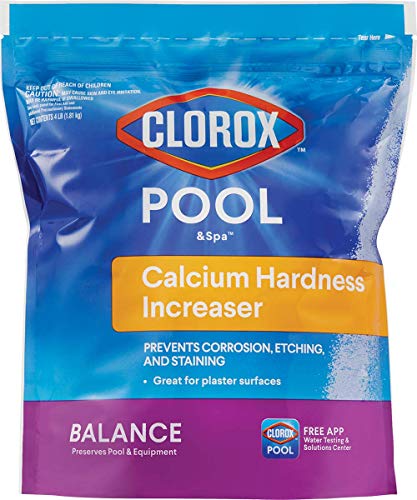
Clorox Pool&Spa Swimming Pool Calcium Hardness Increaser, 4 lb
Smaller bag for topping up calcium in spas and small pools.

Robelle Premium Pool Calcium Up, 25 lb
Bulk calcium chloride for larger pools or hard-to-hold water.

Taylor K-2006C Complete Pool Water Test Kit
Drop test for an accurate calcium hardness reading.
Why calcium hardness matters
Water wants to be balanced. If it does not have enough dissolved calcium, it goes looking for some, and it finds it in your pool's surfaces. Soft, low-calcium water leaches calcium out of plaster, concrete, grout, and tile, slowly etching and pitting them. On the other end, water that is overloaded with calcium drops the excess as scale, a hard white crust that coats tile, plumbing, heater elements, and salt cells. Both directions cost you money: one ruins surfaces, the other ruins equipment.
Calcium hardness is also one leg of overall water balance. Together with pH and total alkalinity, it determines whether water is balanced, aggressive, or scaling, the calculation behind the Langelier saturation index. You cannot keep that balance healthy while ignoring calcium.
The ideal range by pool type
| Pool surface | Target calcium hardness | Why |
|---|---|---|
| Plaster, concrete, pebble | 250 to 400 ppm | Calcium in water protects the calcium-based surface from etching |
| Vinyl liner | 200 to 400 ppm | No calcium surface to protect, but low CH still risks corrosion and foam |
| Fiberglass | 200 to 400 ppm | Stable surface; keep mid-range for balance |
These are estimates from standard pool-care guidance. When in doubt, the middle of the range, around 250 to 350 ppm, suits most pools. Test your own water, and remember that your fill water already contains calcium, sometimes a lot of it.
How to raise calcium hardness
Low calcium is raised with calcium chloride, sold as calcium hardness increaser. It is straightforward but has one quirk: it gives off heat as it dissolves, so handle it with care.
- Test and find how far below target you are.
- Calculate the dose based on your pool volume from the pool volume calculator.
- Pre-dissolve in a bucket of pool water. Add the calcium chloride to the water, never water to the product, and expect the bucket to warm up. Stir until dissolved.
- Pour the solution slowly around the pool perimeter with the pump running.
- Circulate and retest after a few hours, adding more only in measured steps.
How to lower calcium hardness
This is the part owners do not want to hear: no chemical removes calcium from pool water. Just like cyanuric acid, the only practical way down is dilution. You partially drain the pool and refill with fresh water that is lower in calcium.
- Replace a portion of the water. Calcium drops roughly in proportion to how much water you swap, assuming your fill water is softer than your pool.
- Check your fill water first. If your tap or well water is very hard, plain dilution helps less, and you may need softened or reverse osmosis water for a real reduction.
- Drain in stages and observe the same cautions as any partial drain: vinyl liners can shift and inground shells can float if emptied too far. The method mirrors our how to lower CYA guide.
- Rebalance afterward, since fresh water resets alkalinity, pH, and chlorine too.
Keeping pH and alkalinity in range also limits the scaling and cloudiness that high calcium causes, so do not let high CH be the only thing you manage. Use the pH and alkalinity calculator alongside calcium adjustments.
Watch for scale on equipment
High calcium hardness is especially hard on heaters and salt cells, where warm surfaces accelerate scale formation. A scaled salt cell loses output and lifespan, and a scaled heater loses efficiency. If you run a salt system, keeping calcium in range and pH controlled is part of protecting that investment. See saltwater pool chemistry for how calcium ties into salt-cell care.
Safety basics
- Never mix chemicals. Add one product at a time and keep calcium increaser away from chlorine and acid.
- Add chemical to water, never water to chemical, and pre-dissolve calcium chloride in a bucket because it heats up.
- Run the pump while dosing, and retest before re-dosing.
- Store dry chemicals sealed, cool, and out of reach of kids and pets.
The takeaway
Keep calcium hardness in the 200 to 400 ppm range to protect both your pool surfaces and your equipment. Raise low calcium with calcium chloride, pre-dissolved and added in measured steps. Lower high calcium only by dilution, since nothing removes it chemically. Tie it together with the saturation index, manage it alongside alkalinity and pH, and review the whole order in pool water balance. These figures are estimates based on standard formulas, so test your own water and retest before adding more.
Pool Care & Maintenance Planner
Water-test log, chemical dosing tracker, weekly maintenance schedule, and opening and closing checklists, in one printable planner that keeps your pool clear all season.
Frequently Asked Questions
What is the ideal calcium hardness for a pool?
Aim for calcium hardness between 200 and 400 ppm. Plaster, concrete, and pebble pools do best toward the higher half, around 250 to 400 ppm, because the calcium in the water protects the calcium-based surface. Vinyl and fiberglass pools tolerate the lower end. Test and adjust toward the middle of this range for most pools.
How do I raise calcium hardness?
Raise calcium hardness by adding calcium chloride, sold as calcium hardness increaser. Pre-dissolve it in a bucket of water, since it gives off heat as it dissolves, then pour the solution around the pool with the pump running. Add a measured amount, circulate, and retest before adding more. Our calculator estimates the dose for your pool volume.
How do I lower calcium hardness?
There is no chemical that removes calcium from pool water. The only practical way to lower calcium hardness is dilution: partially drain the pool and refill with fresh water that is lower in calcium. If your fill water is also very hard, you may need softened or reverse osmosis water. This is the same dilution approach used to lower cyanuric acid.
What happens if calcium hardness is too low?
Soft, low-calcium water is corrosive. It pulls calcium out of plaster, grout, and concrete to satisfy its hunger for minerals, which etches and pits surfaces over time. Low calcium can also foam and shorten the life of equipment. Plaster pools are most at risk, which is why they target the higher end of the range.
What happens if calcium hardness is too high?
High calcium hardness leads to scale and cloudy water. Calcium deposits form a crusty white buildup on tile, surfaces, plumbing, and especially salt cells and heaters, where it reduces efficiency and shortens equipment life. High calcium combined with high pH and high alkalinity is the worst case for scaling. The fix is dilution with softer water.
Does calcium hardness affect water balance?
Yes. Calcium hardness is one of three readings, along with pH and total alkalinity, that the Langelier saturation index uses to judge whether water is balanced, corrosive, or scaling. Keeping calcium in the 200 to 400 ppm range helps that overall balance, protecting both your pool surfaces and your equipment from damage.
Taking care of a pool?
Use our free calculators and guides to get every number right.
Pool Care Planner: $39