What Is Free Chlorine?
Free chlorine (FC) is the chlorine in your pool still available to sanitize, the working germ-killer. Here is what it means, how it differs from combined and total chlorine, and the level to keep.
Free chlorine (FC) is the chlorine in your pool that is still available to sanitize the water, meaning it has not yet reacted with anything and is ready to kill bacteria, viruses, and algae. It is the single most important number in pool care, because free chlorine is your daily protection against unsafe water.
Free chlorine in plain English
When you add chlorine to a pool, some of it goes straight to work attacking germs and organic gunk. The portion that is still on duty, unused and ready, is your free chlorine. The portion that has already reacted and is mostly spent becomes combined chlorine. Add the two together and you get total chlorine. So the relationship is simple:
- Free chlorine (FC): active, available sanitizer
- Combined chlorine (CC): spent chlorine bound to contaminants (chloramines)
- Total chlorine (TC): FC plus CC
A healthy pool has plenty of free chlorine and almost no combined chlorine. When FC and TC read nearly the same, your sanitizer is keeping up. When they drift apart, chloramines are building and the water often needs a shock.
What free chlorine level should you keep?
Here is where most beginners go wrong: they chase a fixed number like 3 ppm. The correct target is not fixed. It scales with your cyanuric acid level, because CYA holds chlorine back. This is the heart of the FC/CYA relationship, and the working rule is that target free chlorine is roughly 7.5 percent of your CYA.
| CYA level | Minimum FC | Target FC |
|---|---|---|
| 30 ppm | 2 ppm | ~3 ppm |
| 40 ppm | 3 ppm | ~3 to 4 ppm |
| 50 ppm | 4 ppm | ~4 to 5 ppm |
| 70 ppm (salt) | 5 ppm | ~5 to 6 ppm |
These are guideline figures based on standard pool-care ratios. Set your own number with the chlorine calculator after you confirm your stabilizer with the CYA calculator. The one rule that never bends: never let free chlorine fall to zero, because an unchlorinated pool grows algae and harbors bacteria within hours.
Why higher CYA needs higher FC
Cyanuric acid protects free chlorine from sunlight, but it also slows chlorine down. The more CYA in the water, the more free chlorine you need to get the same sanitizing punch. That is why a salt pool running 70 ppm CYA needs noticeably more free chlorine than a fresh chlorine pool at 30 ppm. Knowing both numbers together is what keeps water clear.
How to raise and hold free chlorine
- Pick a chlorine source. Liquid chlorine and cal-hypo raise FC fast. Trichlor tablets dose slowly and add CYA over time.
- Run the pump while dosing so the chemical circulates and reads evenly.
- Add chemical to water, never water to chemical, and never mix different chlorine products.
- Retest before adding more. Dosing figures are estimates, so confirm with a test before a second dose.
- Dose in the evening when adding a large amount, so the sun does not burn it off before it works.
Testing free chlorine accurately
You cannot manage what you do not measure. Free chlorine is the reading that moves the most, so reliable testing matters. A FAS-DPD drop test reads free and combined chlorine directly down to small fractions of a ppm, which is why owners who dose by the numbers rely on one. Test strips are fine for a fast daily check, but confirm borderline readings with a drop test.
Test Kits That Read Free Chlorine Accurately

Taylor K-2006C Complete Pool Water Test Kit
FAS-DPD drop test measures free chlorine directly to 0.2 ppm.

Taylor K-2006 FAS-DPD Pool Test Kit
The standard drop kit for precise FC readings when dosing.
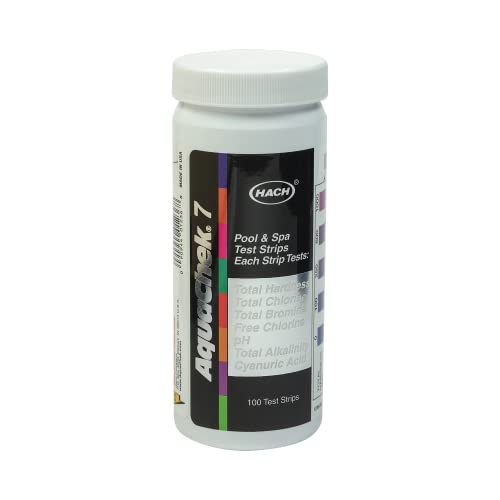
AquaChek 7-Way Pool and Spa Test Strips
Quick read of free and total chlorine for daily checks.
The takeaway
Free chlorine is the working sanitizer that keeps your pool safe, and its target depends on your CYA, not a fixed number. Keep FC in its CYA-based range, never let it hit zero, and watch the gap between free and total chlorine as your early warning for chloramines. Pair the chlorine calculator with the CYA calculator and you will always know exactly how much to add. Always test your own water and retest before re-dosing.
Pool Care & Maintenance Planner
Water-test log, chemical dosing tracker, weekly maintenance schedule, and opening and closing checklists, in one printable planner that keeps your pool clear all season.
Frequently Asked Questions
What is a good free chlorine level for a pool?
There is no single number. Free chlorine should be set against your cyanuric acid level, roughly 7.5 percent of CYA. A chlorine pool at 40 ppm CYA wants about 3 ppm FC, while a salt pool at 70 ppm CYA wants around 5 ppm. The rule that matters is never let free chlorine drop to zero, because that is when algae and bacteria take hold.
What is the difference between free chlorine and total chlorine?
Free chlorine (FC) is the active sanitizer still available to kill germs and algae. Total chlorine (TC) is free chlorine plus combined chlorine, the spent chlorine that has already reacted with contaminants. When your pool is healthy, FC and TC read almost the same. A gap between them means combined chlorine has built up and the water may need a shock.
How do I raise free chlorine?
Add a chlorine source sized to your pool volume: liquid chlorine (sodium hypochlorite), cal-hypo, dichlor, or trichlor tablets in a feeder. Run the pump while dosing so it circulates, add chemical to water rather than water to chemical, and retest before adding more. Our chlorine calculator turns your pool volume and target into a specific dose so you do not overshoot.
Does sunlight lower free chlorine?
Yes. Unprotected free chlorine breaks down quickly in UV light, which is why outdoor pools can lose several ppm on a hot, sunny day. Cyanuric acid, the stabilizer, shields free chlorine from the sun and slows that loss. Too little CYA and chlorine burns off fast. Too much CYA and chlorine becomes sluggish, so balance matters.
How often should I test free chlorine?
Test free chlorine two or three times a week in swim season, and daily during a heat wave, heavy use, or after a storm. Free chlorine is the reading most likely to change day to day, so it deserves the most attention. A FAS-DPD drop test gives the most accurate result, while strips are fine for a quick daily glance.
Taking care of a pool?
Use our free calculators and guides to get every number right.
Pool Care Planner: $39