Why Pool pH Keeps Rising
If your pool pH climbs no matter what you do, the cause is usually high total alkalinity, aeration from water features, or new plaster. Here is how to diagnose it, lower pH with acid, and slow the rise for good.
A pool pH that creeps up every few days is one of the most common balancing headaches, and it usually has a clear cause. The big three are high total alkalinity, which constantly pushes pH up, aeration from water features and jets, which drives off carbon dioxide and raises pH, and new plaster, which leaches alkaline material for months. The fastest way to break the cycle is to lower total alkalinity toward the bottom of range so each rise is smaller, then use acid to bring pH back down. Chasing pH alone without addressing alkalinity is why so many owners feel like they are fighting it daily.
What makes pool pH rise
- High total alkalinity (TA). TA buffers the water, but when it is too high it acts like a spring constantly pushing pH back up. This is the most common reason pH will not stay put.
- Aeration. Waterfalls, fountains, deck jets, bubblers, spillover spas, and even a return aimed at the surface all release carbon dioxide from the water, and losing carbon dioxide raises pH.
- New plaster or pebble finish. A fresh interior finish is alkaline and leaches into the water for months while it cures, pushing pH up the whole time.
- Soda ash overuse. If you raised pH with soda ash and added too much, or use it routinely, you can overshoot and keep pH running high.
- Some salt systems, which can nudge pH upward as a side effect of generating chlorine.
How to diagnose why your pH rises
- Test total alkalinity. If TA is above about 120 ppm, it is almost certainly driving your pH up. Aim to bring it toward 60 to 90 ppm.
- Note your water features. If pH climbs faster on days you run a waterfall or fountain, aeration is a major factor.
- Consider the age of the finish. A pool plastered within the last several months will push pH up as normal curing behavior.
- Review what you have been adding. Frequent soda ash dosing can keep pH elevated.
- Plug your numbers into the pH and alkalinity calculator to see exactly how much acid you need and how lowering TA changes the picture.
Gear to lower and control pH

CPDI Champion Muriatic Acid (4 Gallons)
Standard low-fume muriatic acid to lower pH and high alkalinity in one product.

EZ POOLS Acid Blue Low-Fume Muriatic Acid (2 Gallons)
Lowers pH and reduces alkalinity with less fume for easier handling.

CLOROX Pool&Spa pH Down (Dry Acid, 5 lb)
Granular sodium bisulfate option to lower pH without handling liquid acid.
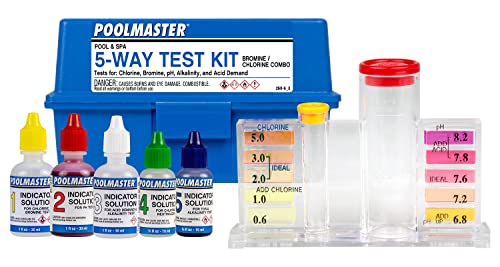
Poolmaster 5-Way Test Kit with Case
Accurate liquid drop test for pH and total alkalinity so you dose correctly.
How to fix rising pH
Step 1: Lower total alkalinity to slow the rise
If TA is high, fix that first, because it is the engine behind the constant pH climb. You lower alkalinity with the same acid you use for pH, just dosed and applied differently. A common approach is to add acid to bring both down, let the pool sit, then aerate to bring pH back up while alkalinity stays low. Getting TA into the 60 to 90 ppm range means each future pH rise is gentler and easier to manage. Our guide to total alkalinity walks through the method in detail, and the pH and alkalinity calculator sets the dose.
Step 2: Lower pH with acid
- Test pH and alkalinity so you know your starting point.
- Calculate the dose for your pool volume with the pH and alkalinity calculator.
- Add the acid to the water with the pump running, pouring slowly across the deep end, away from where you add chlorine.
- Wait and retest after the water has circulated, usually a few hours, before adding any more.
- Repeat gradually rather than overdosing, since it is easy to overshoot and drive pH too low.
Step 3: Manage aeration and new plaster
- Run waterfalls, fountains, and jets less when you are trying to hold pH steady, since aeration speeds the rise.
- With a new finish, expect frequent acid additions during the curing months and test more often than usual.
- Stop using soda ash unless pH actually drops below range, so you are not adding to the upward pressure.
Safety first. Acid is the most hazardous chemical most owners handle. Never mix pool chemicals, and never add acid near chlorine or mix the two, the reaction releases toxic gas. Always add acid to water, never water to acid, pour slowly with the pump running, and wear eye protection and gloves. Retest before re-dosing, and store acid separately from chlorine, away from kids and pets. Dosing figures are estimates based on standard formulas, so test your own water.
How to keep pH stable
- Keep total alkalinity on the low side of range, around 60 to 90 ppm, so pH climbs more slowly.
- Hold pH between 7.2 and 7.8, ideally 7.4 to 7.6, where chlorine works well and water feels comfortable.
- Dose acid on a small, regular schedule rather than waiting for big swings, especially with water features.
- Test pH and alkalinity twice a week during swim season, more with new plaster.
- Use the pH and alkalinity calculator every time so you never overshoot in either direction.
Rising pH feels relentless until you treat the cause instead of the symptom. Lower high alkalinity, manage aeration, ride out new-plaster curing, and dose acid in small steady amounts. Do that and pH settles into range and stays there. For the bigger picture of how all your numbers fit together, see pool water balance.
Pool Care & Maintenance Planner
Water-test log, chemical dosing tracker, weekly maintenance schedule, and opening and closing checklists, in one printable planner that keeps your pool clear all season.
Frequently Asked Questions
Why does my pool pH keep going up?
Rising pH almost always traces back to high total alkalinity, aeration, or new plaster. High alkalinity acts as a pH driver, constantly pushing pH up. Aeration from waterfalls, fountains, jets, spillover spas, and even an aggressive return drives off carbon dioxide and raises pH too. Fresh plaster or pebble finishes leach for months and push pH up. Lower your alkalinity toward the bottom of range to slow the climb, then use acid to bring pH back down.
Is high pH bad for a pool?
Yes, when it stays high. Above about 7.8, chlorine becomes less effective at sanitizing, so algae and cloudiness get easier footholds. High pH also encourages scale to form on surfaces and equipment, and it can cause cloudy water and skin or eye irritation. The goal is to hold pH in the 7.2 to 7.8 range, ideally near 7.4 to 7.6, where chlorine works well and the water is comfortable.
How do I lower pool pH?
Add an acid, either muriatic acid (the most common) or dry acid (sodium bisulfate). Test first, calculate the dose for your pool volume, add the acid to the water with the pump running, wait, and retest before adding more. If your total alkalinity is also high, lowering it with acid at the same time helps keep pH down longer. Never add acid near where you add chlorine, and never mix the two.
Does high alkalinity cause high pH?
Yes. Total alkalinity is a buffer that resists pH change, but when it is too high it tends to drag pH upward and makes pH stubborn to lower. If your pH keeps bouncing back up after you correct it, high alkalinity is usually why. Bringing total alkalinity down into the 60 to 90 ppm range, near the low end, slows the constant pH rise and makes the pool much easier to keep balanced.
Why does a water feature make pH rise?
Waterfalls, fountains, deck jets, bubblers, and spillover spas all aerate the water, and aeration drives carbon dioxide out of the pool. Losing carbon dioxide raises pH. The more you run features, the faster pH climbs. You cannot stop the chemistry, but you can manage it by keeping total alkalinity on the low side so each rise is smaller, running features less when you can, and dosing acid on a regular schedule to keep up.
Why does new plaster raise pH?
A fresh plaster, quartz, or pebble finish is alkaline and continuously leaches into the water as it cures, which pushes pH up for the first several months, sometimes up to a year. This is normal during the curing period. Expect to add acid frequently and test often while a new finish settles. Following the startup directions from your builder and keeping total alkalinity in range helps you ride out the curing phase.
Taking care of a pool?
Use our free calculators and guides to get every number right.
Pool Care Planner: $39