Pool Water Balance Explained
What balanced pool water actually means, why the order you adjust things matters, and the exact sequence to follow: alkalinity, pH, CYA, chlorine, then calcium hardness.
Balanced pool water means five things sit in their happy ranges at once: total alkalinity, pH, cyanuric acid, free chlorine, and calcium hardness. When they do, the water is clear, gentle on skin and eyes, sanitized against germs, and not damaging your plaster, liner, or equipment. The secret most beginners miss is that the order you adjust these matters as much as the numbers themselves.
Here is the short version: balance total alkalinity first, then pH, then CYA, then chlorine, and calcium hardness last. Each step makes the next one easier and more stable. Below is the full picture and why the sequence works.
Test Kits to Measure All Five Levels

Taylor K-2006C Complete Pool Water Test Kit
FAS-DPD drop kit reads FC, CC, pH, TA, CH, and CYA with high accuracy.

Taylor K-1004 DPD 6-in-1 Pool Test Kit
Budget drop kit covering chlorine, pH, alkalinity, and acid demand.
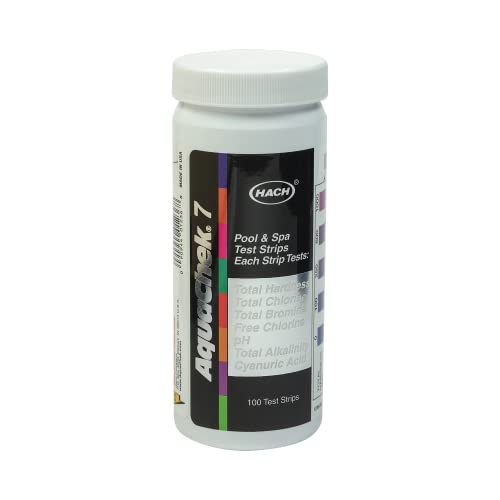
AquaChek 7-Way Pool and Spa Test Strips
Fast weekly check for chlorine, pH, alkalinity, hardness, and CYA.
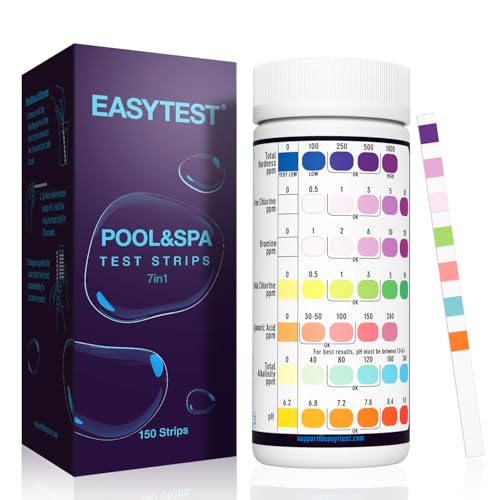
EASYTEST 7-Way Pool Test Strips, 150 Count
Inexpensive backup strips for quick day-to-day testing.
The five numbers that define balanced water
Every pool, inground or above-ground, chlorine or saltwater, lives or dies by these five readings. Here is what each does and where it should land for a typical chlorine pool.
| Reading | Ideal range | What it controls |
|---|---|---|
| Total alkalinity (TA) | 60 to 120 ppm | Buffers and stabilizes pH |
| pH | 7.2 to 7.8 | Comfort, sanitizer strength, surface protection |
| Cyanuric acid (CYA) | 30 to 50 ppm (chlorine), 60 to 80 (salt) | Shields chlorine from sunlight, sets FC target |
| Free chlorine (FC) | ~7.5% of your CYA | Kills germs and algae |
| Calcium hardness (CH) | 200 to 400 ppm | Protects plaster and prevents scale |
Notice that free chlorine does not have one fixed target. It is tied to your CYA, a connection covered in depth in our guide to the FC/CYA relationship. That single fact explains why two pools can have wildly different chlorine needs.
Why the order matters
You could chase each number independently, but you would fight yourself the whole way. Adjust pH before alkalinity and your pH will drift right back. Set chlorine before CYA and your target will be wrong. The sequence below builds a stable foundation and works from the most foundational level up.
Step 1: Total alkalinity
Alkalinity is the buffer that keeps pH from swinging. Set it first, into the 60 to 120 ppm range. Raise low alkalinity with baking soda (sodium bicarbonate). Lower high alkalinity with muriatic acid, ideally followed by aeration to bring pH back up. Our total alkalinity guide walks through both directions, and the pH and alkalinity calculator gives you a dose.
Step 2: pH
With alkalinity settled, pH becomes easy to hold. Aim for 7.2 to 7.8, with 7.4 to 7.6 a comfortable sweet spot. Raise pH with soda ash (sodium carbonate) or aeration. Lower it with muriatic acid or dry acid. Because you fixed alkalinity first, these adjustments will actually stick.
Step 3: Cyanuric acid (CYA)
CYA, also called stabilizer or conditioner, protects chlorine from being burned off by the sun. Without it, an unstabilized chlorine pool can lose most of its chlorine in a few hours of sunlight. Aim for 30 to 50 ppm in a chlorine pool. Add stabilizer slowly through the skimmer or a sock, since it dissolves over days. The catch: CYA only goes up easily. The only practical way down is dilution, explained in how to lower CYA. Use the CYA calculator to size a dose.
Step 4: Free chlorine
Now that CYA is set, you know your chlorine target. Free chlorine should sit at roughly 7.5 percent of your CYA reading, so a pool at 40 ppm CYA wants about 3 ppm FC. Keep it in range every day with liquid chlorine, a salt cell, or tablets. The chlorine calculator turns your gallons and current reading into a dose. Understanding free versus combined chlorine tells you when a normal dose is not enough and you need to shock instead.
Step 5: Calcium hardness
Calcium hardness changes slowly and is the least urgent, so it goes last. Aim for 200 to 400 ppm. Too low and soft water leaches calcium from plaster and grout, etching surfaces. Too high and you get cloudy water and scale on tile and the salt cell. Raise CH with calcium chloride. The only way to lower it is dilution. Our calcium hardness guide covers both, and ties into the saturation index that combines several of these readings into one balance score.
Start with the right volume
Every dose you calculate depends on knowing your pool volume in gallons. A guess here throws off every other number downstream. Measure your pool in feet and run the figures through our pool volume calculator before you touch a single chemical. Pools use feet and the standard 7.48 gallons per cubic foot, and getting volume right once pays off all season.
Safety basics for every adjustment
Pool chemicals are powerful and deserve respect. Follow these rules every time:
- Never mix chemicals. Do not combine different products, especially different chlorine types or chlorine and acid. Mixing can produce toxic gas or even fire.
- Add chemical to water, never water to chemical. Pour the product slowly into a bucket of pool water or broadcast it across the surface per the label.
- Run the pump while dosing so the chemical circulates and disperses.
- Make one change at a time and wait the label time before adding anything else.
- Always retest before re-dosing. It is easy to overshoot, and some overshoots, like high CYA, are a real chore to undo.
- Store chemicals separately, sealed, dry, and out of reach of kids and pets.
A simple weekly rhythm
Once your water is balanced, keeping it there is mostly maintenance. Test FC and pH a few times a week, top up chlorine as needed, and run a full panel (TA, CYA, CH) about once a week. Adjust in the same order whenever something drifts. With the foundation set, you will spend far less time chasing problems and more time swimming.
Ready to put numbers to it? Start with the pool volume calculator, then work through alkalinity and pH, CYA, and chlorine in sequence. Dosing figures are estimates from standard pool-care formulas, so always test your own water and retest before adding more.
Pool Care & Maintenance Planner
Water-test log, chemical dosing tracker, weekly maintenance schedule, and opening and closing checklists, in one printable planner that keeps your pool clear all season.
Frequently Asked Questions
What is the correct order to balance pool water?
Balance in this order: total alkalinity first, then pH, then cyanuric acid (CYA), then chlorine, and finally calcium hardness. Alkalinity buffers pH, so setting it first keeps your pH adjustments stable. CYA sets your chlorine target, so it comes before you dial in free chlorine. Calcium moves slowly and rarely needs urgent changes, so it goes last.
What are the ideal pool water levels?
For a chlorine pool, aim for pH 7.2 to 7.8, total alkalinity 60 to 120 ppm, calcium hardness 200 to 400 ppm, and CYA around 30 to 50 ppm. Free chlorine should be roughly 7.5 percent of your CYA reading. Salt pools run CYA a bit higher, around 60 to 80 ppm. Test your own water and adjust toward these ranges.
How often should I test my pool water?
Test free chlorine and pH two to three times a week during swim season, and more often in hot weather or after heavy use. Test total alkalinity, CYA, and calcium hardness about once a week or every two weeks. A reliable kit or fresh strips make this quick, and consistent testing prevents the swings that cause cloudy water and algae.
Why does my pH keep drifting up or down?
Unstable pH almost always traces back to total alkalinity. If alkalinity is too low, pH bounces around with every small change. If alkalinity is very high, pH tends to creep up and resist correction. Set alkalinity into the 60 to 120 ppm range first, and your pH becomes far easier to hold steady.
Can I add multiple pool chemicals at the same time?
No. Never mix pool chemicals or add them together, especially different chlorine types or chlorine and acid, because the reaction can release toxic gas. Add one chemical at a time, pour it into water rather than water into it, run the pump to circulate, wait the label time, then retest before adding anything else.
How do I figure out how much chemical to add?
Dosing depends on your pool volume in gallons and how far your reading is from target. Start with an accurate volume using our pool volume calculator, then use our chlorine and pH and alkalinity calculators for specific doses. These give estimates based on standard pool-care formulas, so always retest before adding a second dose.
Taking care of a pool?
Use our free calculators and guides to get every number right.
Pool Care Planner: $39