Langelier Saturation Index (LSI) Chart
A clear LSI reference: balanced water targets, the factor values for pH, temperature, calcium hardness, and alkalinity, plus how each one shifts the index toward scaling or corrosion.
Quick answer: The Langelier Saturation Index (LSI) shows if pool water is balanced. Aim for an LSI near 0, within negative 0.3 to positive 0.3. Below that the water is corrosive (etches plaster and metal), above it the water is scaling (deposits calcium). LSI = pH + temperature factor + calcium hardness factor + alkalinity factor minus a TDS constant (12.1 for chlorine pools, 12.2 for salt). Balance your water with the pH & Alkalinity Calculator.
Every other number on your test kit measures one thing in isolation, but the Langelier Saturation Index ties them together into a single verdict on water balance. It answers the question that protects your pool surfaces and equipment: is this water hungry for calcium, satisfied, or overloaded? Hungry water dissolves plaster, grout, and metal. Overloaded water leaves chalky scale on tile, heaters, and salt cells. The goal is balance, an LSI as close to zero as you can hold it. The chart below gives you the balanced targets and the factor values that build the index.
Balanced water targets at a glance
Hold these ranges and your LSI will usually land in the safe zone. The narrower ranges in the third column are ideal starting points for a balanced pool.
| Reading | Acceptable range | Balanced target |
|---|---|---|
| pH | 7.2 to 7.8 | 7.4 to 7.6 |
| Total alkalinity (TA) | 60 to 120 ppm | 80 to 100 ppm |
| Calcium hardness (CH) | 200 to 400 ppm | 250 to 350 ppm |
| Water temperature | varies by season | warmer reads higher |
| LSI result | negative 0.3 to positive 0.3 | as near 0 as possible |
How LSI is calculated
The index adds four factor values, then subtracts a constant:
LSI = pH + temperature factor + calcium hardness factor + alkalinity factor minus TDS constant
The TDS constant is 12.1 for a normal chlorine pool and about 12.2 for a saltwater pool because salt raises total dissolved solids. The factor tables below convert each reading into its contribution. You look up the factor for your temperature, calcium hardness, and carbonate alkalinity, add those to your measured pH, then subtract the constant.
Temperature factor
| Water temp | Factor |
|---|---|
| 32 F | 0.0 |
| 46 F | 0.2 |
| 53 F | 0.3 |
| 60 F | 0.4 |
| 66 F | 0.5 |
| 76 F | 0.6 |
| 84 F | 0.7 |
| 94 F | 0.8 |
| 105 F | 0.9 |
Calcium hardness factor
| CH (ppm) | Factor |
|---|---|
| 25 | 1.0 |
| 50 | 1.3 |
| 75 | 1.5 |
| 100 | 1.6 |
| 150 | 1.8 |
| 200 | 1.9 |
| 300 | 2.1 |
| 400 | 2.2 |
| 600 | 2.5 |
Carbonate alkalinity factor
| TA (ppm) | Factor |
|---|---|
| 25 | 1.4 |
| 50 | 1.7 |
| 75 | 1.9 |
| 100 | 2.0 |
| 150 | 2.2 |
| 200 | 2.3 |
| 300 | 2.5 |
| 400 | 2.6 |
A worked example
Say your pool reads pH 7.5, water temperature 80 F, calcium hardness 250 ppm, and total alkalinity 80 ppm, in a standard chlorine pool. The temperature factor for 80 F is about 0.65, the calcium factor for 250 ppm is about 2.0, and the alkalinity factor for 80 ppm is about 1.9. Add them up:
LSI = 7.5 + 0.65 + 2.0 + 1.9 minus 12.1 = negative 0.05
That result sits right next to zero, so this water is beautifully balanced. Now imagine pH drifts up to 8.0 on a hot day. The index jumps to about positive 0.45, into scaling territory, and you would lower pH with acid to pull it back. That sensitivity is why pH is the lever you reach for first.
How each factor shifts the index
pH: moves the index point for point and changes fastest, so it is your primary control. Higher pH means higher LSI and a tendency to scale.
Temperature: warmer water reads higher on the index. A pool that is balanced at 85 F in summer can turn corrosive at 55 F in fall without any chemical change, which is why winterized pools often need extra calcium and alkalinity.
Calcium hardness: the slow, stable foundation. Too low and the water dissolves calcium from plaster to satisfy itself, too high and it deposits scale. You can only lower it by draining and diluting.
Total alkalinity: buffers pH and feeds the index. Keep it in range so pH stays steady and the LSI does not swing with every dose.
Test accurately before you calculate LSI
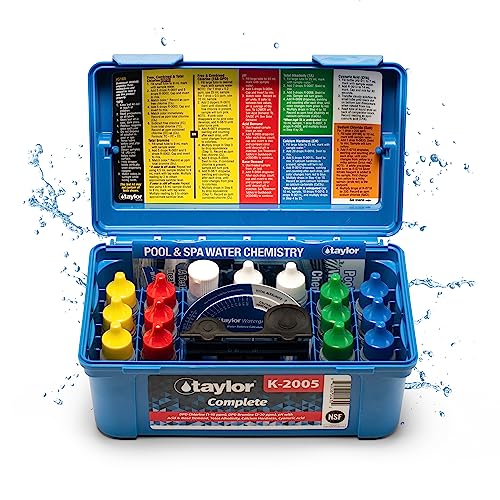
Taylor K-2005 Complete Pool Water Test Kit (FC, pH, TA, CH)
Reagent drop test for the exact numbers the LSI formula needs.

Taylor Pool & Spa Water Test Kit (Chlorine, pH, and more)
A simpler reagent kit for routine pH and chlorine checks.
Putting LSI to work
You do not need to compute the index by hand every week. Hold the balanced targets in the first table, test with a quality reagent kit so your numbers are real, and check the LSI whenever something feels off, such as etching, cloudy scale, or a salt cell that keeps fouling. For the full explanation of saturation and step-by-step balancing, see our Langelier Saturation Index guide. To make the corrections, lean on the pH & Alkalinity Calculator and the dosing figures in the Chemical Dosing Cheat Sheet.
Frequently Asked Questions
What is the Langelier Saturation Index?
The Langelier Saturation Index, or LSI, is a single number that tells you whether your pool water is balanced, corrosive, or scale-forming. It combines pH, water temperature, calcium hardness, total alkalinity, and total dissolved solids into one value. An LSI near zero means the water is in balance with calcium carbonate, so it neither dissolves plaster and metal nor deposits scale.
What LSI value should I aim for?
Aim for an LSI as close to zero as you can, and keep it within the range of negative 0.3 to positive 0.3. Below negative 0.3 the water turns corrosive and can etch plaster, dissolve grout, and attack metal. Above positive 0.3 the water tends to deposit calcium scale on surfaces, equipment, and salt cells. Zero is the sweet spot of perfect balance.
Which factor moves the LSI the most?
pH and temperature swing the index the fastest day to day, since both change quickly. A rise in pH or water temperature pushes the LSI up toward scaling, while a drop pushes it down toward corrosive. Calcium hardness and total alkalinity move more slowly because they only change when you add chemicals or fresh water, so they act as the stable foundation of your balance.
How do I lower a high LSI?
A high LSI means the water is scale-forming, usually from high pH, high calcium hardness, or high alkalinity. The easiest lever is pH: lower it toward 7.2 to 7.4 with muriatic acid. You can also let temperature drop naturally. Calcium hardness only comes down through partial draining and refilling with softer water, so manage pH first.
How do I raise a low LSI?
A low or negative LSI means corrosive water, common in cooler months or soft-water areas. Raise calcium hardness with calcium chloride toward 250 to 350 ppm, nudge pH up toward 7.6 to 7.8 with soda ash, and bring total alkalinity into the 80 to 120 ppm range with baking soda. Warmer water also lifts the index, so winterized pools often read corrosive.
Do saltwater pools need a different LSI calculation?
The factors are the same, but salt pools carry much higher total dissolved solids, so they use a larger TDS constant of about 12.2 instead of 12.1. Salt cells are sensitive to scaling, so balanced LSI matters even more for them. Keeping the index near zero protects the cell plates and extends their life. Always confirm balance with a full reagent test, not strips alone.
Taking care of a pool?
Use our free calculators and guides to get every number right.
Pool Care Planner: $39