Weekly Pool Maintenance Routine
A simple weekly pool maintenance routine: skim, brush, vacuum, empty baskets, test and dose the water, and check the pump. Includes a printable weekly schedule.
A clear pool is mostly about a consistent weekly routine, not heroic cleanups. Each week you skim the surface, brush the walls, vacuum the floor, empty the baskets, test and dose the water, and check the pump and filter. Spread across a few short sessions it takes under an hour total. Below is the full routine plus a printable schedule, with the calculators that tell you exactly how much of each chemical to add.
Weekly Pool Cleaning Tools

Sunnyglade Heavy Duty Pool Leaf Rake Skimmer Net
Deep fine-mesh net to scoop leaves and debris off the surface fast.

Sepetrel 17.5" Pool Brush Head
Curved-end brush for scrubbing walls, floor, and waterline weekly.
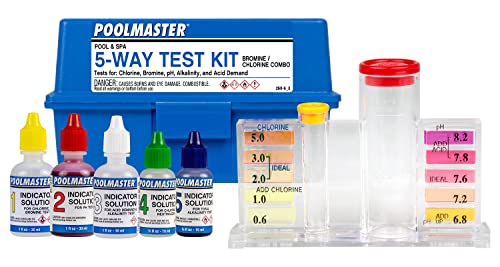
Poolmaster 5-Way Pool Water Test Kit
Reads chlorine, pH, alkalinity, and acid demand for weekly balancing.
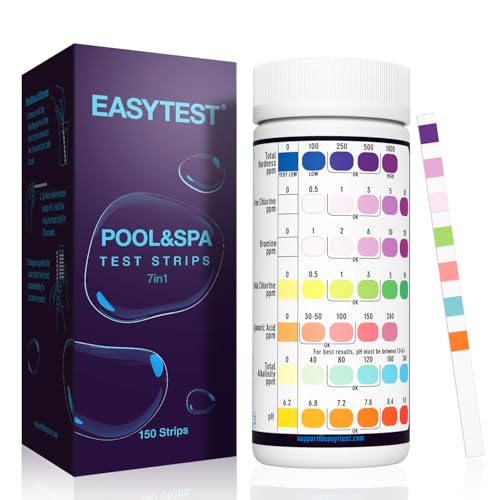
EASYTEST 7-Way Pool Test Strips (150 Count)
Fast daily strips for a quick chlorine and pH check between full tests.
Step 1: Skim the surface
Start with a leaf rake or skimmer net and clear floating leaves, bugs, and debris before they sink and break down. Sunk debris is harder to remove and feeds algae, so skimming first, ideally a quick pass every day or two in peak season, saves work later. Run the net along the waterline and into corners where wind pushes debris.
Step 2: Brush the walls and floor
Brush the walls, floor, steps, and especially shaded corners, behind ladders, and the waterline. Brushing lifts the invisible film and early algae that chlorine alone cannot reach, knocking it into the water where the filter and sanitizer can deal with it. A weekly brush is one of the cheapest, most effective ways to prevent algae from ever taking hold.
Step 3: Vacuum the pool
Vacuum settled dirt and debris off the floor. A manual vacuum on the normal filter setting works for light debris; switch to the waste setting for a heavy mess so you do not push fine dirt back through the filter. A robotic or suction cleaner can handle routine weeks, but after a storm a manual vacuum to waste clears the bottom fastest.
Step 4: Empty the baskets and check the filter
- Empty the skimmer basket and the pump strainer basket. Full baskets choke flow and make the pump work harder.
- Glance at the filter pressure gauge. When pressure climbs about 8 to 10 psi above the clean reading, clean the cartridge or backwash the sand or DE filter.
- Look and listen at the pump for leaks, air bubbles, or odd noises that signal a problem.
If your water never quite turns over, your pump may be undersized or running too few hours. Check the flow you need with our pump size calculator, which sizes a pump to cycle the whole pool in about eight hours.
Step 5: Test and dose the water
Test free chlorine and pH a few times a week, and run a full test, including alkalinity, CYA, and calcium hardness, weekly. Then dose precisely rather than guessing.
- Free chlorine: keep it in the right range for your CYA. Our chlorine calculator turns your gallons and target into an exact dose.
- pH: hold 7.2 to 7.8. Adjust with our pH and alkalinity calculator.
- CYA: 30 to 50 ppm for a chlorine pool, checked with our CYA calculator.
The link between CYA and your chlorine target trips up a lot of owners, so it is worth reading our FC and CYA relationship guide once. Safety basics: never mix pool chemicals, always add chemical to water and not water to chemical, run the pump while dosing, and retest before re-dosing. Store everything dry, separated, and away from kids and pets.
Your weekly pool maintenance schedule
Use this table as a printable plan. Daily tasks are a couple of minutes; the weekly block is your main session.
| Frequency | Task | Notes |
|---|---|---|
| Daily (peak season) | Quick skim, check free chlorine and pH | Strips are fine for a fast check |
| Daily | Confirm pump is running its full cycle | About 8 hours of turnover |
| Weekly | Brush walls, floor, steps, corners | Focus on shade and the waterline |
| Weekly | Vacuum the pool | Waste setting for heavy debris |
| Weekly | Empty skimmer and pump baskets | Improves flow and filtering |
| Weekly | Full water test and dose | FC, pH, TA, CYA, CH |
| As needed | Clean or backwash filter | When pressure is 8 to 10 psi high |
| As needed | Shock the pool | After storms, parties, or CC over 0.5 ppm |
When to shock outside the routine
Beyond the weekly rhythm, shock when combined chlorine rises above about 0.5 ppm, after heavy bather loads, following a storm, or at the first hint of algae. The right shock level depends on your CYA, so use our shock calculator for the dose, and follow the full method in our how to shock a pool guide. Doing it at dusk lets the chlorine work overnight without the sun burning it off.
Keep the habit and the pool stays clear
The whole point of a weekly routine is that nothing ever gets bad enough to need a rescue. Skim, brush, vacuum, empty, test, dose, and check the pump, every week, and your water stays balanced and clear with minimal effort. If it does slip, our cloudy water guide and green pool guide walk you back to clear.
Pool Care & Maintenance Planner
Water-test log, chemical dosing tracker, weekly maintenance schedule, and opening and closing checklists, in one printable planner that keeps your pool clear all season.
We review them on their own too, in full detail: the Dolphin Nautilus CC Plus and the salt cell that scale shortens.
Frequently Asked Questions
How much time does weekly pool maintenance take?
For most backyard pools, plan on 20 to 30 minutes once or twice a week, plus a quick daily skim and chlorine check in peak season. Skimming, brushing, emptying baskets, and testing are fast once it is a habit. Vacuuming and deeper cleaning add time but are usually weekly, not daily, so the routine stays manageable.
What should I test for every week?
At minimum test free chlorine and pH a few times a week, and ideally check total alkalinity, cyanuric acid, and calcium hardness weekly or biweekly. Free chlorine and pH move fastest and matter most for clear, safe water. Alkalinity and CYA change slowly, so a weekly look is usually enough to catch drift before it becomes a problem.
How long should I run my pool pump each day?
Run the pump long enough to turn the whole pool over about once a day, which for most pools is roughly 8 hours, more in hot weather or heavy use. Splitting run time into two cycles helps keep water moving. A variable-speed pump can run longer at low speed for better filtering and lower energy cost.
Should I brush my pool every week?
Yes. Brushing the walls, floor, steps, and corners once a week lifts the thin film and early algae that the filter and chlorine cannot reach on their own. Pay extra attention to shaded areas, behind ladders, and the waterline. Regular brushing is one of the simplest ways to prevent algae from getting a foothold.
Why does my chlorine keep disappearing?
Fast chlorine loss usually comes from strong sun with low cyanuric acid, heavy bather loads, organic debris, or early algae consuming it. Sunlight destroys unstabilized chlorine quickly, so a correct CYA level is the fix for daytime burn-off. If chlorine vanishes overnight too, you likely have an algae or contamination demand that needs a shock.
Do I need to vacuum if I have a robotic cleaner?
A robotic cleaner handles most floor and wall debris and can replace manual vacuuming for routine weeks. You will still want to skim the surface, empty baskets, brush trouble spots, and test the water. After a storm or heavy leaf drop, a manual vacuum to waste can clear a big mess faster than a robot alone.
Taking care of a pool?
Use our free calculators and guides to get every number right.
Pool Care Planner: $39