How to Fix Cloudy Pool Water
Cloudy pool water usually means low chlorine, unbalanced pH or calcium, or weak filtration. Here is the exact order to test, balance, filter, and clarify your way back to sparkling water.
Cloudy pool water is almost always one of four things: low free chlorine, out-of-range pH or calcium hardness, poor filtration, or a fresh fill that has not turned over yet. The fast fix is to test the water first, correct chlorine and pH, then run the pump around the clock and add a clarifier only if the haze lingers. Do not reach for chemicals blindly, because the test result tells you which lever to pull.
What causes cloudy pool water
Haze is just sunlight bouncing off particles too small for your filter to catch in one pass. Those particles come from a handful of predictable sources, and matching the cause to the cure saves you days of guesswork.
- Low free chlorine (FC): when sanitizer drops, bacteria and organic debris multiply faster than the filter clears them. This is the most common cause and the first thing to rule out.
- High pH or high calcium hardness (CH): pH above 7.8 or CH above roughly 400 ppm lets calcium fall out of solution as a milky cloud, a problem known as calcium scaling.
- High cyanuric acid (CYA): too much stabilizer weakens your chlorine, so the same FC reading sanitizes less effectively and water turns dull.
- Weak filtration or circulation: a dirty filter, short run times, or dead spots with no flow let fine particles stay suspended.
- A fresh fill or heavy bather load: new source water, a rainstorm, sunscreen, pollen, and dust all add particles your filter needs time to remove.
Step 1: Test before you treat
You cannot fix what you have not measured. A reliable test kit shows you exactly which number is off so you treat the real problem instead of dumping in product and hoping. Test free chlorine, pH, total alkalinity, calcium hardness, and CYA.
- Free chlorine: aim for the level your CYA calls for, roughly 7.5 percent of your CYA reading for a chlorine pool.
- pH: 7.2 to 7.6.
- Total alkalinity: 60 to 120 ppm.
- Calcium hardness: 200 to 400 ppm.
- CYA (stabilizer): 30 to 50 ppm for a chlorine pool, 60 to 80 for salt.
Test and clarify cloudy water
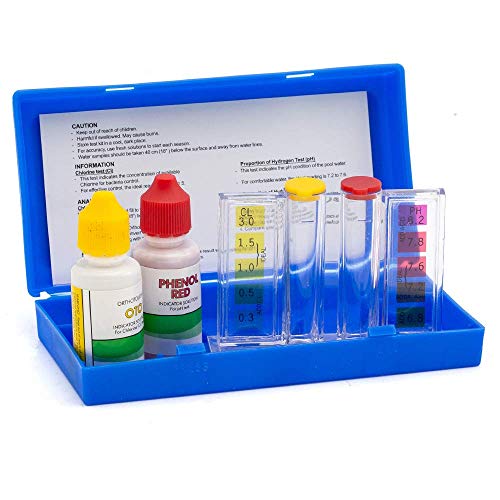
WWD POOL 2-Way Pool Test Kit (Chlorine + pH)
Quick everyday check of chlorine and pH to find the cause of haze.
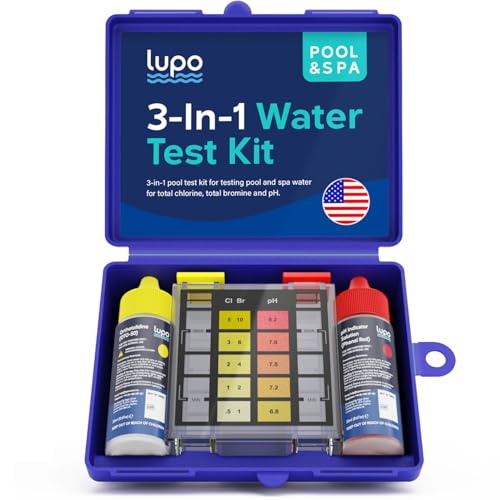
Lupo 3-in-1 Pool Test Kit (Chlorine, Bromine, pH)
A second testing option if you want a backup color comparator.

Clorox Pool&Spa Super Water Clarifier (1 Quart)
Clumps fine particles so your filter can trap mild haze.
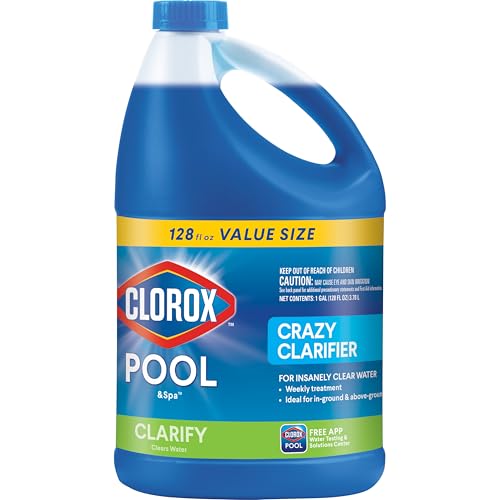
Clorox Pool&Spa Concentrated Pool Clarifier (128 oz)
Larger-pool clarifier for clearing dull, hazy water fast.
Step 2: Balance chlorine and pH
Fix low chlorine
If FC is low, this is your culprit far more often than the filter. Raise chlorine back to target, and if the water is dull-to-milky rather than just hazy, shock the pool to oxidize the contaminant load. Our chlorine calculator gives you the exact dose for your pool volume and current reading. Persistent low chlorine has its own causes worth reading about in why your pool has low chlorine, and if you see any green tint, jump to clearing a green pool.
Fix high pH and alkalinity
High pH clouds water and blunts chlorine at the same time. Lower it with muriatic acid to the 7.2 to 7.6 range and confirm alkalinity sits between 60 and 120 ppm. The pH and alkalinity calculator sizes the acid dose for you. For the full picture of how every reading interacts, the pool water balance guide is the best next read.
Safety first. Never mix pool chemicals together, and never combine different chlorine types or chlorine and acid. Always add chemical to water, never water to chemical. Pre-dissolve or broadcast per the label, run the pump while dosing, and retest before adding anything else. Store chemicals separately and away from kids and pets.
Step 3: Run the filter and circulate
Chemistry sets the stage, but the filter does the actual clearing. Once chlorine and pH are in range, run the pump continuously until the water is clear, not just on a timer.
- Clean the filter first. Backwash a sand or DE filter, or rinse a cartridge, so it can move water freely.
- Run 24 hours a day while clearing a cloudy pool. A pool should turn over its full volume in about 8 hours, so several turnovers per day speed things up.
- Brush and skim walls and floor to push settled particles into the water column where the filter can grab them.
- Aim returns to create circulation and eliminate dead spots, especially in corners and around steps.
Step 4: Add a clarifier or flocculant if needed
If the water is balanced, the filter is clean, and you have run the pump for a day but the haze remains, a clarifier helps your filter finish the job. Add it per the label, keep the pump running, and give it 24 to 48 hours.
For heavy, can-not-see-the-bottom cloudiness when you need fast results, a flocculant (floc) is the stronger option. Floc drops particles to the floor in a dense layer that you then vacuum directly to waste, bypassing the filter so you do not re-cloud the pool. Plan to lose and replace some water, and rebalance afterward.
| Situation | Best fix |
|---|---|
| Low chlorine or chlorine smell | Shock, then run filter |
| pH above 7.8 or high calcium | Lower pH, retest, run filter |
| Mild dull haze, balanced water | Clarifier + 24 to 48 hours of runtime |
| Heavy cloudiness, can-not-see-bottom | Flocculant + vacuum to waste |
| New fill or after a storm | Balance + extra filter runtime |
How to prevent cloudy water
Clear water is mostly a maintenance habit. Keep these in your weekly routine and cloudiness rarely returns.
- Hold free chlorine in range every day, especially in hot weather and after heavy use.
- Keep pH at 7.2 to 7.6 and alkalinity at 60 to 120 ppm so chlorine stays effective.
- Run the pump long enough for at least one full turnover daily, more in summer.
- Clean the filter on schedule and watch the pressure gauge for the cue to backwash or rinse.
- Brush walls and floor weekly and skim debris before it dissolves into the water.
- Shock after parties, storms, or heavy bather loads to stay ahead of the contaminant spike.
Cloudy water is a warning light, not an emergency. Test first, fix the number that is off, run the filter, and clarify only if you must. For the calculators that take the guesswork out of every dose, start with the chlorine calculator and the pH and alkalinity calculator.
Pool Care & Maintenance Planner
Water-test log, chemical dosing tracker, weekly maintenance schedule, and opening and closing checklists, in one printable planner that keeps your pool clear all season.
Frequently Asked Questions
How long does it take to clear cloudy pool water?
With balanced water and a clean filter running around the clock, light cloudiness usually clears in 1 to 3 days. The pump is what physically removes the haze, so the more hours it runs, the faster you get clarity. A clarifier can shave a day off the timeline, while a heavy bloom that needs flocculant and vacuuming to waste may take longer.
Should I shock my pool if the water is cloudy?
Shock first if the cloudiness comes with a low free chlorine reading, a chlorine smell, or any green tint, because those point to a sanitizer or early algae problem. If chlorine is already in range and the water is just dull or hazy, the issue is usually filtration or balance, and a clarifier plus more runtime fixes it without more chemicals.
Why is my pool cloudy after I shocked it?
Fresh shock can briefly cloud water as it oxidizes contaminants, and undissolved cal-hypo granules add a temporary haze. This normally clears within 24 hours once the pump circulates and the dead organic matter is filtered out. If it stays cloudy past a day, check your pH and calcium hardness, since high readings cloud water on their own.
Will a clarifier fix cloudy pool water?
A clarifier helps your filter trap the tiny particles that cause haze by clumping them into larger pieces. It works best as a finishing step after your chlorine, pH, and alkalinity are already balanced and the filter is clean. A clarifier cannot replace sanitizer, so it will not clear water that is cloudy because chlorine is low or algae is forming.
What is the difference between a clarifier and a flocculant?
A clarifier gently clumps fine particles so your running filter can catch them over a day or two. A flocculant (floc) drops particles to the pool floor in a heavy layer that you then vacuum to waste, bypassing the filter. Use a clarifier for mild haze and a flocculant for heavy cloudiness when you need fast results and can vacuum manually.
Can high pH make pool water cloudy?
Yes. When pH climbs above about 7.8, dissolved calcium can come out of solution as a fine white cloud, and high pH also weakens chlorine so contaminants build up. Bring pH back to 7.2 to 7.6 with muriatic acid, retest, and the haze often clears on its own. Use our pH and alkalinity calculator to get the acid dose right.
Taking care of a pool?
Use our free calculators and guides to get every number right.
Pool Care Planner: $39